








By Jim Servin
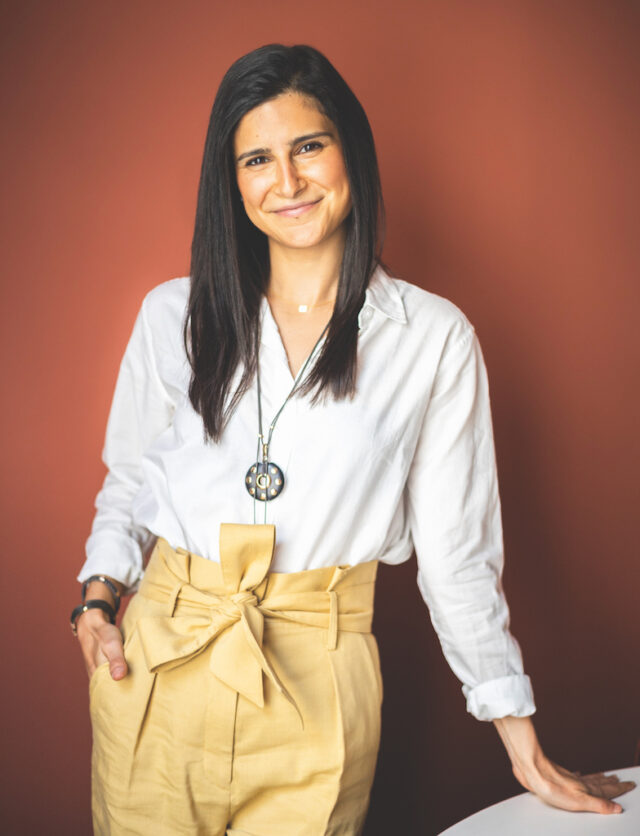
When Chloe Harrouche was diagnosed with breast cancer at the age of 23, her reaction was shock and disbelief. The New York City native, who had graduated from UPenn as a bioengineer, considered herself well versed in health care, having worked in the medical field as a consultant. “At first I questioned if it was really happening,” Harrouche recalls. “Did they make a mistake? Even when they told me that the biopsy showed cancer cells, I thought it was a precursor to cancer, that I was going to get it removed and that would be the end of it. But it was Stage 2.”
Her response, swift and decisive—a double mastectomy two weeks after the diagnosis—was followed by chemotherapy and radiation. By December of that year, she was deemed cancer-free, but filled with questions about prevention and where that fit into her care going forward. “I saw for the first time how discombobulated the patient experience is. You’re seeing all these incredible specialists, but none of them are talking to each other,” Harrouche says. “There’s no coordination of care, or joint effort toward prevention.”
Harrouche created a wellness regimen that consisted of strenuous exercise, a low-carbohydrate diet with caloric restriction, and intermittent fasting. But she admits she went too far, impacting her ovarian health at a time when she was ready to start a family. “That’s when I learned about the power of integrative medicine,” Harrouche says. “For the first time, I met with a doctor who was able to identify that my body was in a state of stress, and not in an optimal state of being able to conceive. That taught me a lot about the risks of wellness. Wellness is something that most people aspire to care about. The problem comes when you have too much consumerization of wellness and too little clinical oversight.”
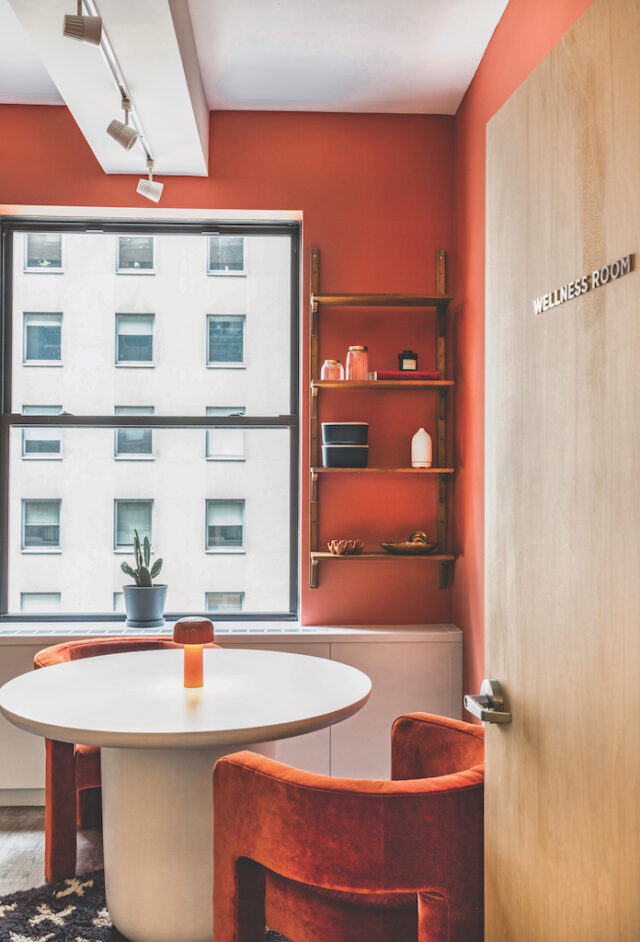
In 2021, she co-launched The Lanby, a New York City hospitality-led members club, reimagining primary care with a rigorous, personalized approach to treating illness and optimizing well-being. In addition to a medical team, The Lanby personnel includes a wellness expert and a member advocate, housed in a Fifth Avenue office with bright colors and stylish furnishings evoking Harrouche’s favorite New York City lodgings, Crosby Street Hotel and The Whitby Hotel.
Members get a dedicated Care Team, comprehensive labs, a personalized care plan, referrals to top specialists and consolidation of records. “A lanby is a buoy, a flotation device with light. We are a lifeline in a sea of darkness,” says Harrouche. “We wanted a name inspired by the hospitality industry, that evokes joy, something we all miss in our experience of going to the doctor.”
This summer, The Lanby offers Just The Labs, a la carte public access to lab work (hormonal, metabolic, nutrient, cardiovascular) and a 45-minute virtual consultation. Those who decide to become members can have the $500 consultation charge applied to The Lanby’s full annual fee ($6,000 for those 35 and older, $4,380 for those under 35).
Today, Harrouche, mother of Mauricio, 2, and Leah 1, enjoys a wellness regimen that begins with a 5:45AM wake-up, and a half-hour workout. Meals are “plant-forward, with lots of healthy fat and good-quality animal protein.” She likes to be in bed by 10PM. In the name of balance—”it’s the new wave of wellness”—Harrouche enjoys a once-a-week cocktail. “Usually it’s a dirty martini, with gin.” thelanby.com