






By Regina Weinreich
Current events shine a light on the CIA: What role did it play in the mullahs’ rise in Iran? Southampton’s Katharina Otto-Bernstein’s new documentary, The Last Spy, about Peter Sichel, a resident of Amagansett who died in 2025 at age 102, limns the story of American intelligence from its inception during WWII to today.
Otto-Bernstein spoke to Purist as she was leaving for Berlin to show the film at the Ministry of Culture. Researching double agents for a film about the Dulles brothers, the accomplished filmmaker, who has made newsreels for German television, met Sichel when he was a mere 95, writing his memoir. Sichel admired her film Absolute Wilson, about playwright and director Robert Wilson, founder of the Watermill Center. After the CIA heavily redacted his manuscript, Sichel agreed to a tell-all film from his vantage point, as colleagues note, “at the epicenter of history.”
Dubbed the “Jewish James Bond,” he appears in the film’s first scene, at age 100, descending the stairs at his Amagansett home in a chair lift. So much for glamorous gadgetry. Neither shaken nor stirred as in the martinis of debonair movie spies, this man’s drink may have some bearing on a fascinating career in espionage—in unexpected ways.
The Sichel family had an unusual Holocaust past, fleeing Mainz, Germany, for their vineyard in Bordeaux in the south of France, before being detained in a French internment camp, and eventually making their way to America. Settled on Manhattan’s Upper East Side, the family found themselves situated amid American Nazis, seeing them in cafes, parading proudly in New York City.
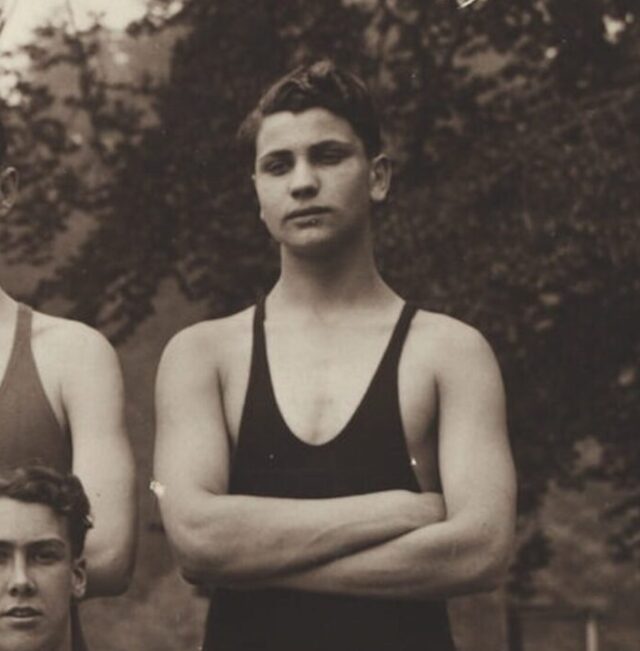
Enlisting in the military to fight them abroad, Peter Sichel was useful as a speaker of many languages, and clever. A wunderkind, he ended up, in his 20s, becoming head of the Office of Strategic Services, the CIA precursor, in Berlin. Through the Cold War and beyond, he was a CIA spymaster, an “insider” privy to covert activities.
“Have you told me all your secrets?” Otto-Bernstein asks him.
“They can probably hang me for some of the secrets I have told you,” Sichel responds, speaking truth to America’s missteps in Iran, Guatemala and Indonesia. (No action too low, a female agent procured Indonesian president Sukarno’s stool to verify a rumor he was ill. He was not.) We messed up, he says, realizing “democratic ideals may sabotage our interests, especially economic.” He left the CIA in 1959, returning to the family business, making wines, including Blue Nun.
“It’s bad when you love intelligence; it’s like being on a drug,” he tells Otto-Bernstein. When he worked in Hong Kong, agents enjoyed cocktail parties every night, an active exchange of wives and husbands. But he loved the cuisine, and out East, he cooked for friends, accompanied—of course—by good wine.
Acclaimed in Europe, The Last Spy is making the rounds of film festivals in the U.S., and is to be released later this year. thelastspyfilm.com