








By Lauren Willett
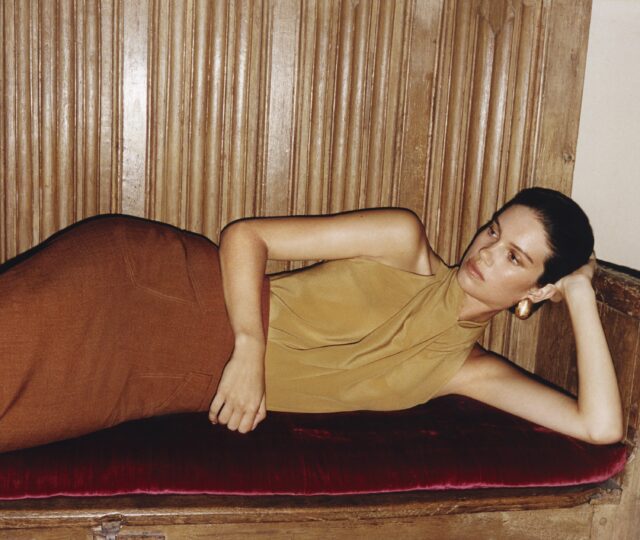
The exchange between art, clothing and the body is not only honored but amplified by Harvard and Istituto Marangoni alum Marina Zoullas through her emerging womenswear brand, ATÉSE. As its name suggests, the brand draws from Lucio Fontana’s Concetto Spaziale, Attese, the postwar canvases through which the artist cut into a traditionally flat surface to introduce space, depth and an entrance to another dimension.
“Whether it was modern art or contemporary art, I was always learning and absorbing everything about art,” says Zoullas. Born and raised in New York City, she spent weekends moving through museums and Chelsea galleries, as well as enjoying old films filled with inspiration. Naturally, her impulse to create emerged just as early. As a young girl, she built sculptures from found objects, learned to knit and crochet, and eventually taught herself how to sew. Between the ages of 10 and 15, much of what she wore was made with her own hands, and soon enough, she followed a Harvard education and luxury fashion internship with studies in London, where she pursued a master’s degree in fashion at Istituto Marangoni.
There is something undeniable about the relationship between art and the body. We see it across generations of architecture, film, sculpture and the many other abstractions born from an evolving human mind. Whether paint on a canvas, fabric assembled on a body or worlds built through cinema, art moves far beyond the surface on which it is placed. It lives in the feelings it gives us, its value lying in the depth it creates and the ways it evolves through those who experience it.
Fashion is one of the most intimate expressions of this relationship. It allows a person to physically step into the reality she is creating, moving through the world in an identity influenced by what she wears. Often, these identities draw from the expressionists of the past and the works that have survived them—continually adapted, reinterpreted and made new by those who behold them.
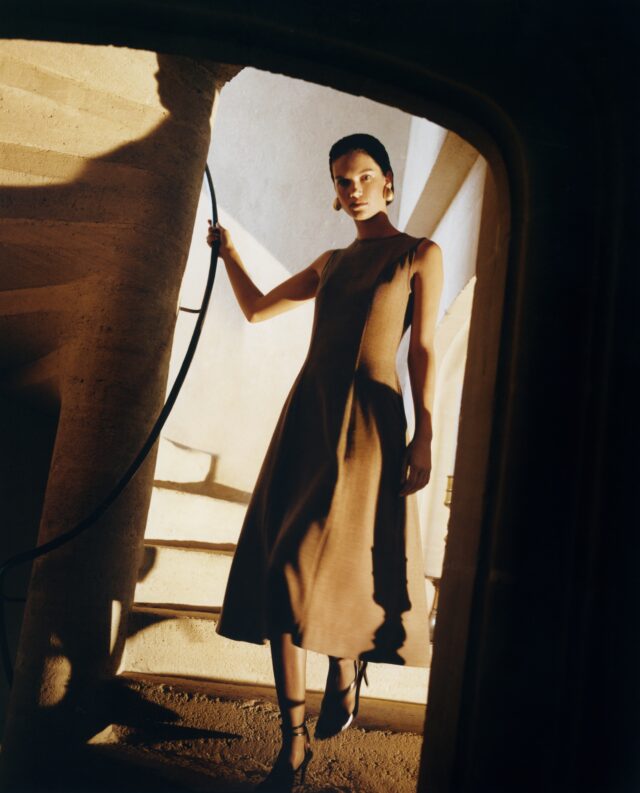 Zoullas’ appreciation for art and a pull toward clothing creation began to converge. The designer explains that “the two never felt like isolated disciplines.” ATÉSE is the natural articulation of that connection: a wardrobe in which fabric meets the body as Fontana’s canvas met space, playing with structure and fluidity, concealment and revelation.
That same tension unfolds in ATÉSE’s FW26 collection, where sculptural silhouettes draw from the tailored femininity of the 1950s—what Zoullas calls the “fluid, undone glamour of the ’70s.” Fitted knits, cleanly cut trousers and skirts, silk separates, and warm earth tones bring a sophisticated sensuality to clothes intended to be lived in for generations.
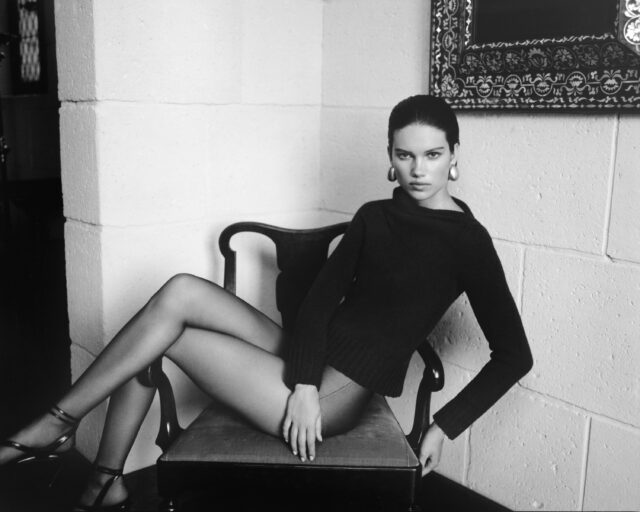 The ATÉSE woman is many people. She is busy, social and zipping seamlessly between cities; she carries a day into dinner and one chapter of her life into the next. “My goal is to not make garments for this exact moment,” Zoullas says, “but silhouettes and a feeling that still make sense to a woman years after she buys them—pieces she can style for all the different versions of herself she becomes over that time.”
That longevity extends to how each garment is made. “A piece can’t really be timeless if it isn’t well and ethically made, because it won’t last, and you won’t want it to,” she says. “It can’t be elegant if it’s chasing a trend.”
Every ATÉSE garment is produced in Italy from natural fibers—primarily deadstock—with no plastic used in its fabric or packaging. Its production partner is a certified social enterprise, with 30 percent of its workforce coming from disadvantaged backgrounds, while fabric offcuts are donated locally or repurposed into materials for playgrounds. The integrity is inseparable from the design: Clothing cannot evolve with a woman if it is not constructed to remain with her.
It is a philosophy that returns to Fontana’s distinction between the eternal and the immortal. “Immortal is something that is stagnant and unchanging,” Zoullas says. “Eternal implies something that can change and evolve with time, which is exactly what happens with clothing, and clothing that is meant to grow with you.”
ATÉSE is made to do exactly that: evolve with a woman through new opportunities, shifting identities, great loves and the many lives contained within a single one. The wardrobe does not freeze her in a moment; it gives her the space to move beyond it.
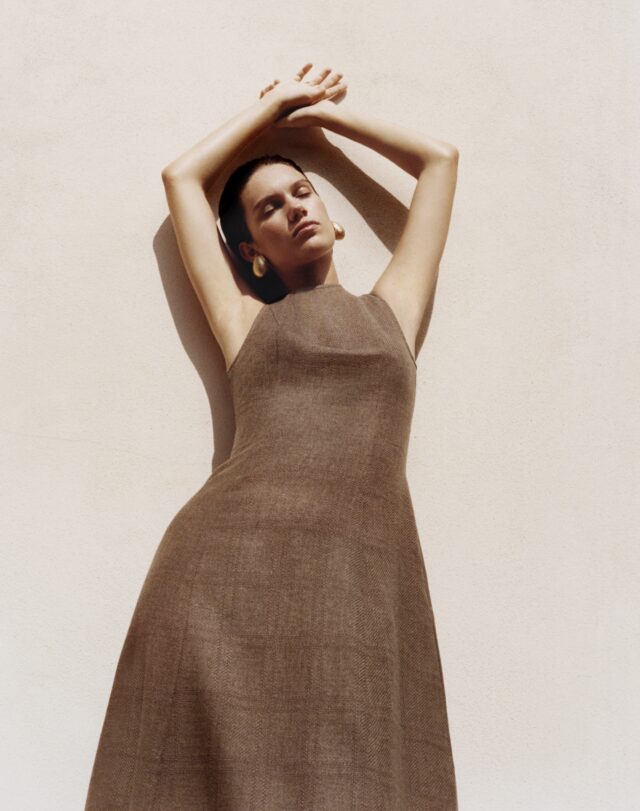 On September 10, ATÉSE will mark its launch at ONNA House in SoHo, where the collection will be placed in conversation with the work of female artists and artisans. It’s a fitting beginning for a brand founded on the belief that art is not simply something we observe, but rather something we enter, inhabit and carry forward, eternally.
Explore more in Style at The Purist.
Never miss an issue—join The Purist community.