








By Camille Coy
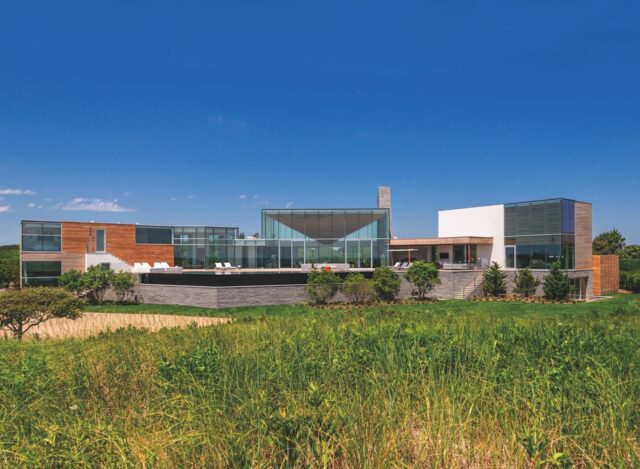
Barnes Coy Architects has designed over 250 houses, many of them in the Hamptons. My father, Chris Coy, and his childhood friend, the late architect Robert Barnes, founded Barnes Coy Architects 32 years ago, and in many ways, Barnes Coy has helped to form the character of Hamptons modernism. Now, and for almost a decade, Barnes Coy has continued to create ambitious modern architecture with Chris Coy as the sole principal, leading a team of skilled architects. In recent years, in addition to designing new houses in St. Barts, Florida, Southern California and the East End of Long Island, BCA has been asked to revisit their previous houses, both by the original clients and new owners. As a writer who spent her childhood touring his construction sites, seeing my father revisit these spaces has dominated our ongoing conversations about life and modern architecture, which I’m happy to continue here.
CAMILLE COY: We’ve spoken about how modern architecture looks to the future. What do you mean by that?
CHRIS COY: Modernism is an approach, but the intentions of modern architects shift over time to adapt to how people want to live. I meant that houses designed for the particular conditions of the site with modern building techniques and materials will be here, and be in conversation with new houses as they shape the area, or in conversation with future architects as they update them. In a way, they’ll be collaborating with Barnes Coy, which is always cool to think about. In my practice over the last 30 years, it has been important for us to choose durable materials and make design decisions that emphasize longevity and unfold within the context of our clients’ lives. This way, the house will be easy to live in, open to advances that can make it more sustainable and lower maintenance, and able to endure change and serve a family for generations.
You and your studio are currently working on four renovation projects or design updates, three of which are houses created by Barnes Coy between 10 and 20 years ago. Is modern architecture specifically suited to being updated?
Yes, I think it is. More than just a style, modern architecture is a way of working with material, and every year, there are advances in energy and building technology that make our houses more efficient and closer to how we initially envision them. Modern houses often have rectilinear shapes with flat roofs, which is inherently simple to add to. In our current projects, including Woodland House and Inversion House, which are featured here, we’re mainly focusing on changes to transparencies, reimagining how spaces are used, and technological and material updates.
What are some of the most significant innovations in material and building technology that you’re excited to use in these Barnes Coy houses?
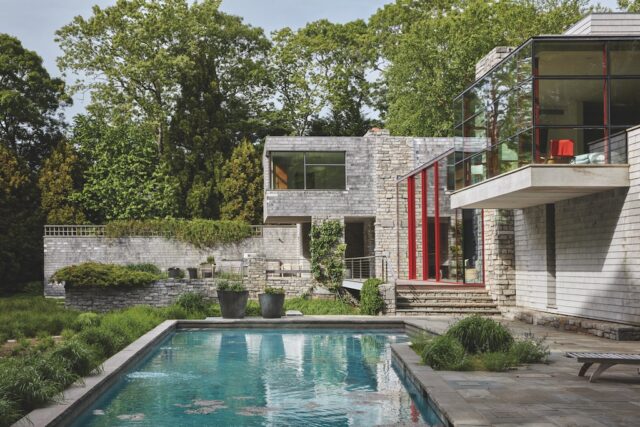
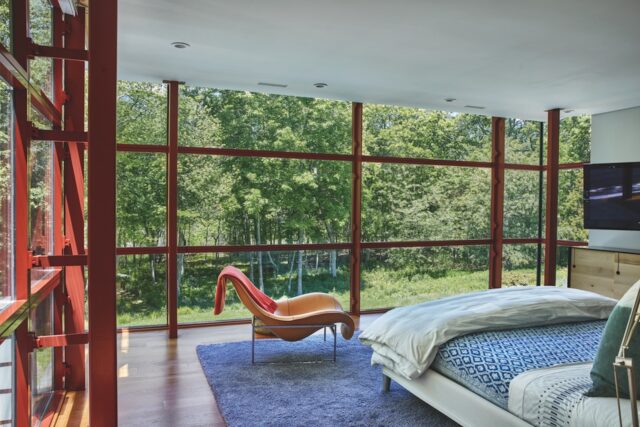
Natural light is an extremely important design element for me. In only the last five years, there have been significant advances in glass technology. The size of glass panels had always been a challenge in designing houses as I imagined them, as open as possible to natural light, and with living spaces that were directly responsive to the views and the environment. For Woodland House, our project from 18 years ago, which we recently updated and photographed for this story, the house is surrounded by the warm light and colors of the woods. Now, in the main living spaces, we were able to create completely glass walls, as originally intended. They’re motorized and allow my clients to read books, listen to music and entertain in spaces that are truly indoor and outdoor. It’s how I always imagined this house, and working with my same clients again is a privilege I don’t take for granted. It was great to see how they’ve lived with the house all this time.
We’ve lived most of my life in a house built in 1810, which we’ve updated over the years, and you say that this period of architecture has a simplicity and a spareness of detail that is more aligned with current modernism than the Victorian style that followed it. Residential architecture is culturally situated and aesthetics don’t progress in a linear way. What do the updates to your designs say about what people want in a modern house in the Hamptons today?
Now, people want more than just a gym; they want spaces designed for wellness, and to support and encourage the health of the mind and the body. In Woodland House and many other houses in recent years, we’ve designed meditation spaces and added saunas, both infrared and classic Swedish, steam rooms, cold plunges, and aromatherapy rooms to complement Pilates, yoga, spinning and other fitness spaces. Wellness at home has become such an important part of people’s lives, and I really consider the views and natural light experience of these spaces.
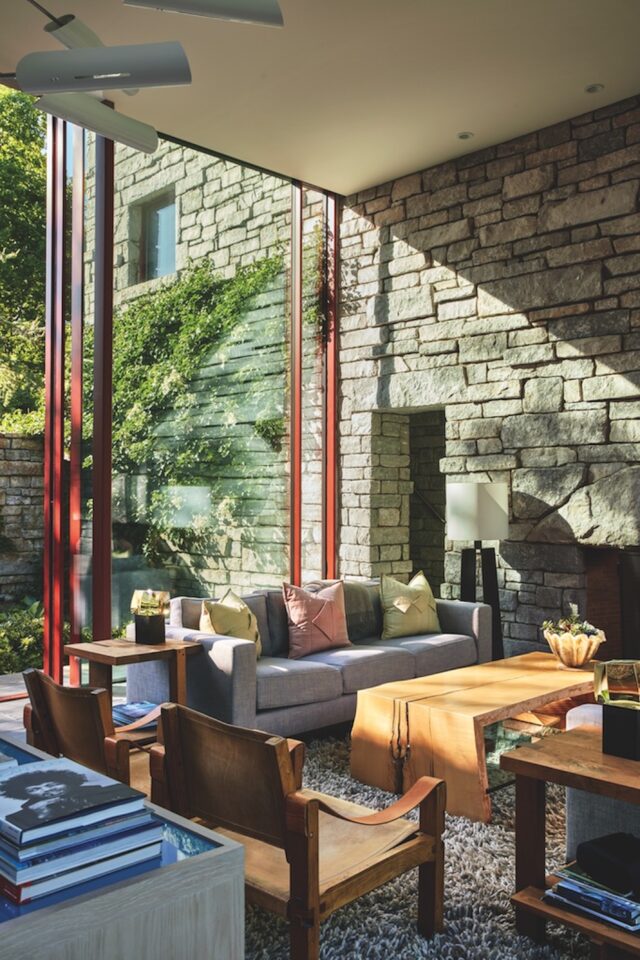
People are entertaining at home more, and the forms of modernism encourage flexible spaces and movement between indoors and outdoors. We have had to reimagine how to design outdoor spaces, like full kitchens, to function the same as interior ones, and new types of social and personal spaces. In Woodland House, we added a listening room, where my clients who love music can have communal and personal listening experiences. There’s no need to repeat the residential norms of the past, which may have formed around ways of life that are no longer relevant to the present.
How would you describe the experience of going back into these houses that you know so intimately?
It’s like walking through a memory of the design process. I remember drawing the floor plan, imagining the rooms. I can see what worked well and what I could’ve done better had the technology been up to it, and in these cases, I had the opportunity to realize that. Many of our architects who worked on these houses are still with Barnes Coy, and so for all of us as a team to revisit these designs is a unique experience. barnescoy.com
Explore more in Architecture at The Purist.
Never miss an issue—join The Purist community.