









For years, face-lifts were the beauty industry’s open secret: easily recognized, seldom discussed, and often defined by an overly tight, “worked-on” appearance. That narrative is evolving. As results become more refined, the conversation has shifted from whether a face-lift looks good to how it was performed—and whether it preserves the individual’s identity.
According to internationally recognized facial plastic surgeon Sam Rizk, MD, FACS, those answers begin not with trends or technology, but with a clear understanding of the surgical approach itself. “A face-lift isn’t a single procedure,” he explains. “It’s a category of approaches, and the technique chosen plays a critical role in how natural the result appears, and how well it lasts.”
Traditional SMAS (superficial muscular aponeurotic system) face-lifts focus on tightening a thin layer of tissue beneath the skin, typically lifting in a more horizontal direction while removing excess skin. “In carefully selected patients, SMAS techniques can be very effective,” Rizk says. “But because the work is more superficial, the lift can be limited—particularly in the midface—and excessive tension can create a pulled appearance over time.”
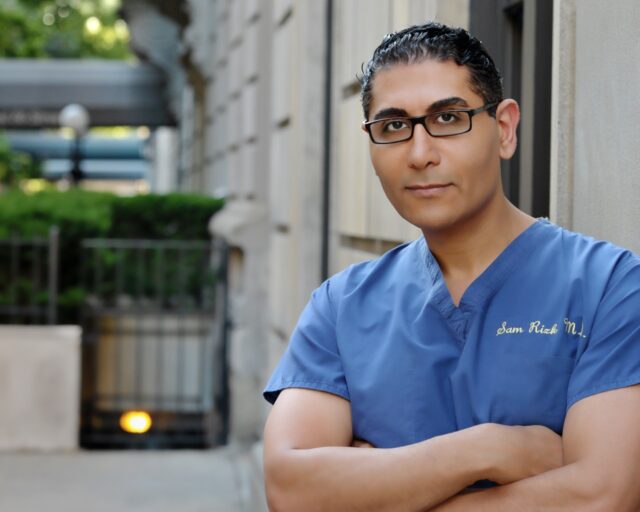
Rizk’s deep plane face-lift works at a deeper anatomical level, lifting the skin, muscle and fat together as a single unit. By repositioning facial structures, the approach mirrors the natural direction of aging. “As we age, facial tissues descend,” Rizk notes. “Restoration requires lifting those structures back to where they once were, not stretching the skin over them.”
The result is a quieter form of rejuvenation: restored cheek volume without fillers, softened folds, a refined jawline and improved neck contours, all while preserving expression and identity. Scars tend to heal more discreetly, and outcomes are often longer lasting and more believable.
This philosophy of restraint and anatomical respect has also made Rizk a sought-after educator. This February, he returns as faculty to the Baker Gordon Educational Symposium in Miami—the longest-running aesthetic surgery conference in the United States, now marking its 60th and final year—where he will teach his deep plane technique to surgeons from around the world. “The goal is never to look ‘done,’” Rizk says. “It’s to look rested, healthy and entirely like yourself.” drsamrizk.com; @drsamrizk