






By Cristina Cuomo
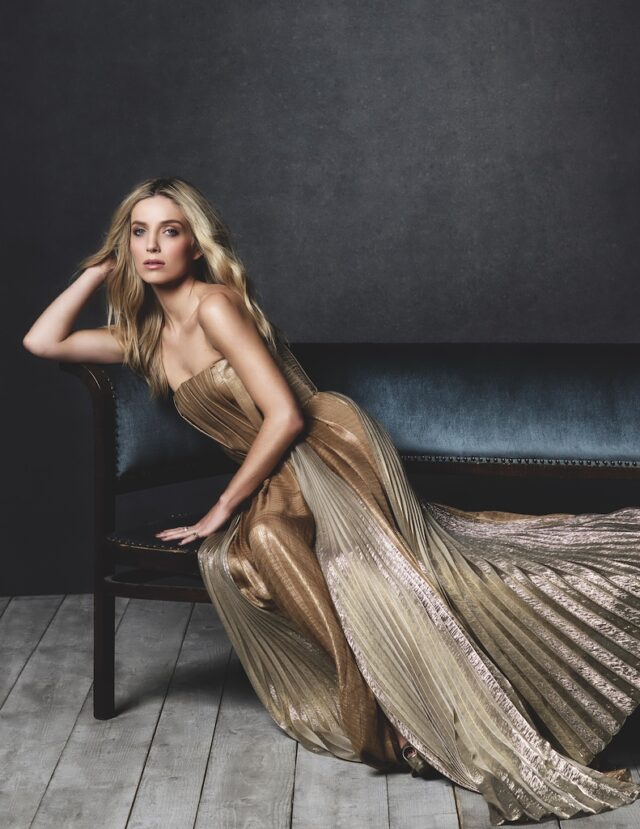
PURIST: Congratulations on your new baby. It’s so exciting. First-time mom. I’ll get to those questions in a bit. You have a lot of new movies coming up. But I did want to touch really briefly on your character, Grace, in Peaky Blinders, whom I loved so much.
ANNABELLE WALLIS: Oh, thank you.
That must have been such an incredible experience, playing opposite actors like Cillian Murphy and Tom Hardy in such a compelling storyline.
The fandom around it has been wonderful. I’m incredibly humbled to be a part of it. It’s a BBC production, so it’s all about the quality on the page. It attracted such incredible people.
Well, you made it special. Your character was the love story in the whole series.
Yeah, she was a very strong woman, and I think in my naive mind I just thought there would be a plethora of these strong women. I think now we’re in an age where you can have incredible antihero females, but they are fewer than one would think. She resonated with so many people. The most complicated people I know usually are these women, with a chameleonic way of taking on different roles, be it the alpha or the divine feminine. I feel women are not represented in their full entirety on screen. I always look for these complex female characters, and Grace really embodied all of that. I thought people would really hate her because I think they’re so used to a more classic written heroine, but they loved her because she was flawed, and there’s something so human about allowing your characters to be seen in their flaws and allowing people to accept them because each of us has our own. I felt very lucky to play a woman like that.
A female spy, and at that time.
She was one of the first—it was a true story and Grace, the character, was one of the first female spies in MI6 when the separatist movement was happening in Ireland. Of course, we embellished the character because there was only limited information about the real Grace. Steve Knight really knows how to write a strong female, and you see that in all the other female characters as well in the show. A lot of fun. Equal to the men.
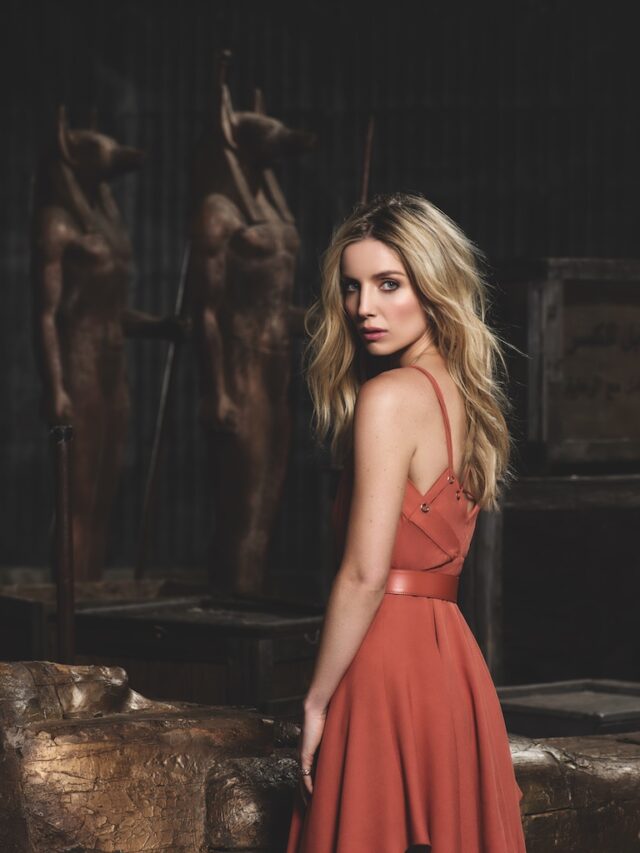
You’ve chosen another powerful female role in a script based on a true story, with the upcoming psychological thriller Unabomber. What appealed to you about that role as Christiana Morgan, an American woman in the 1950s, a real-life psychologist, artist and academic partner to Professor Henry Murray, with whom she co-directed the Harvard Psychological Clinic? That’s a very powerful position as a woman.
I read it and as I did my research, I felt so protective of her because she is really one of the brilliant unsung heroes of feminine psychology—she was Carl Jung’s muse. She came from a very wealthy family. She wasn’t encouraged to be educated, she was encouraged to marry well, and she rebelled against that. Even with her stature, even being an equal to Henry Murray—together they devised the TAT [Thematic Apperception Test] and they were asked by the CIA to do these tests on Harvard students—she was never given the proper credit. Again, another flawed character. She was so led by her passion to understand the human psyche. She made some tricky decisions; they tested on these young students, and one of them became the Unabomber. These psychological tests were very aggressive, created to see how far you could push someone. It’s another thing to look at your society and believe that you are safe among your peers, among the people that you trust, especially in school environments. That was a terrifying aspect of the script, that they were so much closer than we think to the betrayal of our society. We are complicit in creating some of these monsters, and so we have to look at the way we live our lives and the choices that we make and the responsibility we have to every person in our society to make sure that they don’t lead to the outcome of our film, Unabomber.
She’s not only a powerful woman in history, but also one who identified a schizophrenic person who went on to become the Unabomber.
I think there was deep shame about her role there, too. There was deep care for her students and the people that she put through these tests, but there was ego. There was a desire to satisfy an academic curiosity. The moral conflict you feel throughout the whole film is like, there are good people doing a bad thing, and it leads to something terrible. It’s going to speak to a lot of people, because it talks about the pressures of the time, the pressures of a society. And out of those pressures there are these rogue circumstances that happen, and we all have to take slightly more accountability for the people around us and for our communities to make sure that they don’t happen again.
Did part of you wonder if those tests hadn’t been done, would he have become the murderer that he became?
I think that there’s a predisposition to going in that direction in your life. I’m a person who believes the body keeps a score, that when trauma happens in youth and it’s not dealt with, it shapes the rest of your life. He ended up being such a prodigy, and he got into Harvard so young, and it could have gone in many different directions, but no doubt the pressure of that environment was one of the factors that led him to be curious of a different way of life. I can’t say it was the direct cause, because I’m sure he was already predisposed to that kind of behavior, and he didn’t get the help he needed.
So, then you pivot into an action film. Mutiny with Jason Statham is an intense tale of greed, betrayal and vengeance, which is Statham’s signature genre. You managed to make your role powerful and elegant. How was it, preparing for this role, and also playing this very physical part?
In Hollywood’s current climate, few stars can command a global cinema release. Usually things get a finite window, and they’re on the streamers. This is an opportunity to work with somebody who could still command that global release. I was so excited just to have the opportunity to collaborate with Jason, whom I know through his wife, Rosie, and he’s a lovely man. Also, what I loved so much was that the character wasn’t written as a love interest, she was written as an equal to the man. There was no trope-ish character like femme fatale.
That’s something you don’t see in Hollywood very often, especially in an action thriller.
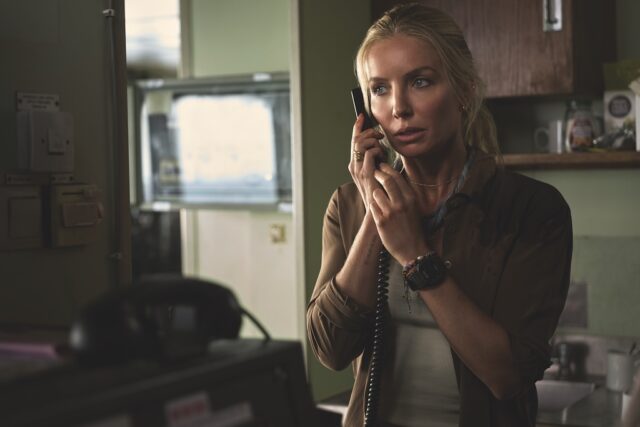
It was such a relief to read that. That’s how I am in my real life. We shot off the coast of Malta. We sailed to Africa for 10 to 12 hours a day. We’d shoot on the boat, on location. The antithesis of AI. We were on practical sets. We had waves, the best stunt teams in the world. It was something that had never been done. It was a very hard shoot, but it was real old-school filmmaking, and I think that’s what you see onscreen and you feel—the fact we got it made was almost impossible just because of the weather. It was just very difficult to do. I’m naturally sporty. It keeps you so in the moment when you’re using your body as a tool like that. We had no time to rehearse. Everything you see me do they were like, We have five minutes left. There’s a swell coming, and the boat is going to rock and we won’t be able to shoot, so what can we do? Grab the gun, shoot the guy, run down the stairs. It was wild. So, it was one of those times where you leave it to the gods of cinema. None of us had an idea that it would come together at all.
The gods of cinema. I love that. Is there a role that you haven’t played that you’d like to play?
There are so many. At this point, I’m just trying my hardest to honor the feminine in all their glory and play women who are strong and dynamic and intelligent. Forces to behold, like the women I know in my life.
You’ve described acting as requiring complete presence. Presence is a pillar of Buddhist philosophy. What mindfulness practices do you do? Do you have any spiritual exercises to arrive at that place where you can be fully present when you’re in a scene?
I’m a real believer in the mind-body connection and spiritual alignment, that you attract what you feel inside. I do meditation and journaling. I do purged emotional writing. I just try to align. I’ve had to incorporate not only my physical wellness, but my emotional wellness and my mindfulness in order to survive in this industry. I’ve always been obsessed with Carl Jung, and the shadow self and looking into those aspects of yourself and bringing them up, and individuation. I have a wonderful functional medicine doctor in Los Angeles called Dr. Habib Sadeghi. He’s written a book called The Clarity Cleanse. Here in New York, I’ve just started working with Dr. Frank Lipman.
That must be preparing you well for motherhood. What is the best advice anyone has given you as of late about motherhood?
I’ve had so many wonderful, sage women giving me advice. But I just feel like the investment I made in myself, in my spiritual self, in my emotional, physical self 10 years ago, has given me the groundwork to ensure that my child will come into a safe and stable, loving environment. I think the advice has always been to do the work first. Plant the seeds of your life, and watch the garden grow. So, I’m just so grateful that throughout my life and especially in the last 10 years, the people that I’ve met have guided me to seek deeper healing and deeper growth. Surround yourself with good, healthy people and your journey will be good and healthy, I hope.
What are some pillars of wellness that you’ll never compromise on, and why?
I try to eat well, of course. I give myself permission to enjoy my food. If you can sleep, hydrate, move your body, think good thoughts and love yourself, it manifests in your body, your health and your bloodwork. I’ve seen it in myself.
Explore more in Entertainment at The Purist.
Never miss an issue—join The Purist community.