








By Cristina Cuomo
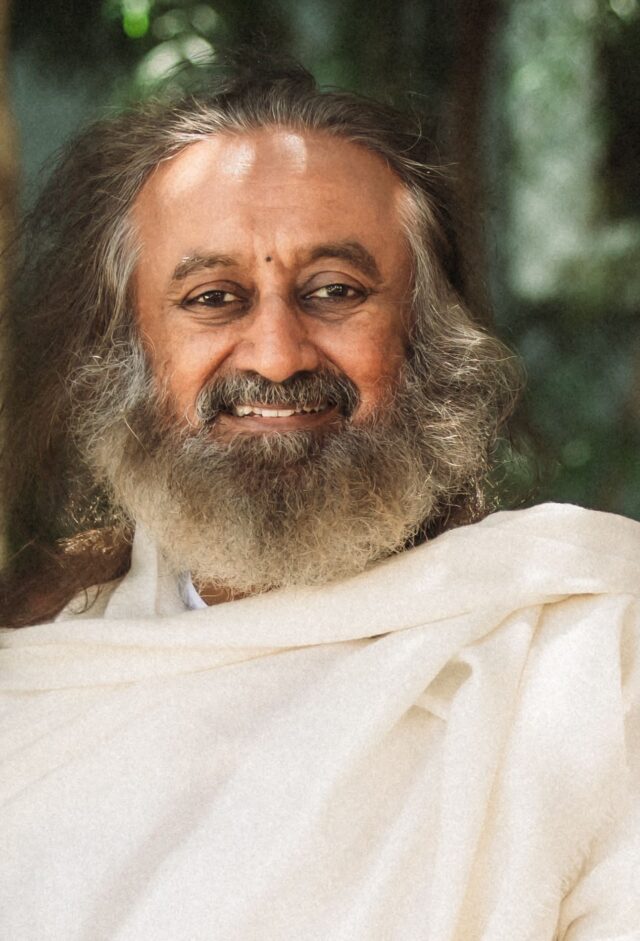
Guided by a vision of a stress-free, violence-free society, Gurudev Sri Sri Ravi Shankar has built one of the world’s largest volunteer-based humanitarian movements. After an apprenticeship in the 1970s with Maharishi Mahesh Yogi, the founder of Transcendental Meditation, he started the Art of Living Foundation in 1981. Today, it reaches people in more than 180 countries, and its programs center on his signature breathing technique, Sudarshan Kriya. Through Art of Living and the International Association for Human Values, he has also worked as a mediator in conflicts from Colombia to Iraq. In New York around the International Day of Peace, Gurudev sat down with Purist to talk about breath, stress and where peace begins.
PURIST: You’ve said breath connects the body and mind. What does that mean in practical terms?
GURUDEV RAVI SHANKAR: If you’re not breathing, you’re not alive. That’s it. Our breath is the link between our emotions and our sensations. It’s so basic that we tend to ignore it, but there are a lot of secrets in it.
What can changing the rhythm of our breath do for our emotions?
RS: For every emotion, there’s a particular rhythm. In theater school, they’ll teach you that to show anger, you have to breathe differently, and in a love scene, you breathe in a very different rhythm. Beyond that, we hold a lot inside ourselves. We hold stress, and our energy goes so low. Breathing techniques help us get over all of that.
Sudarshan Kriya came to you in 1982, after a period of silence. What happened during those days?
RS: I was fascinated to go into silence, and after that, it just came to me like a poem. A few people gathered around me, and I started teaching them. I started learning myself, too.
Why is breath work so central to your approach to well-being?
RS: People often say they don’t have time to meditate, but they can’t say they don’t have time to breathe. So I tell them to do some breathing. It’s a sort of mental hygiene. You have dental hygiene. If someone says they don’t have time to brush their teeth, they’d better make the time.
What don’t we understand about stress?
RS: We don’t acknowledge that it’s there. Once you notice it, you want to get rid of it. But many people don’t even know they’re loaded with stress. They think it’s normal life, and they keep going until they reach a tipping point, when they feel so frustrated that they frustrate everyone around them.
What is the relationship between peace and happiness?
RS: You can’t have happiness without peace. Peace is the basis, and happiness is our nature.
Art of Living has brought breath work and resilience programs to schoolchildren, college students, veterans and prisoners. What have those very different groups taught you about the human mind?
RS: Their problems are different, but the cause is basically the same. It’s a lack of awareness of our whole self, our true self. That’s what is troubling the whole planet today—a lack of attention to one’s own self and, at the same time, a lack of empathy.
What have you learned about our capacity to recover from trauma and adversity?
RS: I teach people to unlearn things. We’re overloaded with so much information and so much knowledge that we seem to know everything. But when it comes to really living life, we aren’t as simple as we were when we came to the planet. There’s a part deep within us, a child in us, that we forget to nurture. That happens when we start unlearning and just learn to be.
You’ve met with people on opposing sides of extraordinarily difficult conflicts. Is there an instance that has stayed with you?
RS: I’ve been doing this for 45 years, so I don’t let any impressions stick. I keep myself clear, like a mirror.
What allows someone to stop seeing another person as an enemy?
RS: People see their enemy as the very cause of the problem. But if you see that the culprit is also a victim, you go beyond that. You don’t consider them an enemy. You consider them sick people.
Can there be lasting peace in society without peace within individuals?
RS: If not lasting, then at least in intervals, and that is also good. I’m happy if people feel even some moments of peace in their lives. It gives them a breathing space to get out of conflict, so it doesn’t harm their health so much. Mental health is a big issue today because we’re reeling in conflict day and night. We don’t take time for ourselves, and we don’t get the relaxation our brain and our body need.
It sounds so simple.
RS: That’s my job, to make simple the things that are too complicated.
Why do you see helping other people as part of our own well-being?
RS: When you’re happy, you naturally want to share, and that gives you more happiness. There are two types of happiness. One is the joy you get when you receive things, like a Christmas present or a birthday present. That’s infant happiness. True happiness is that of a mother. She’s happy to feed everybody and take care of everyone. There is a joy in sharing, in giving, in caring, and people should not be deprived of that joy. So service is part of any spiritual growth or human development. It has to be.
How important is it to tend to our spiritual side?
RS: We are made of both matter and spirit. If you ask me whether it’s important to have a balanced meal, not just stuff yourself with fat and carbs, I’d say yes, it keeps you healthy. Similarly, to keep your spirit alive and your mind healthy, you need spiritual practices. That means a little yoga, some meditation, some breathing techniques and seeing life from a broader perspective, with wisdom.
If someone has never meditated or practiced breath work, what is one simple thing they can do?
RS: Download our app, Bliss by Gurudev. I’ve recorded a number of meditations there, short and long, and it’s free. Just put it on, sit, relax and listen.
Has your definition of happiness changed over the decades?
RS: I don’t bother to define happiness. Love, happiness, compassion—you can’t define these things. They are to be felt. We should go beyond words, right?
Beyond stillness and breath work, what do you enjoy?
RS: I make sure I enjoy everything I do. I like cooking. I like sewing. I like playing instruments.
Learn more at artofliving.org, watch a brief biography of Gurudev here, and watch the replay of the Instagram Live here.
Explore more in Mindfulness at The Purist.
Never miss an issue—join The Purist community.