







By Jenny Landey
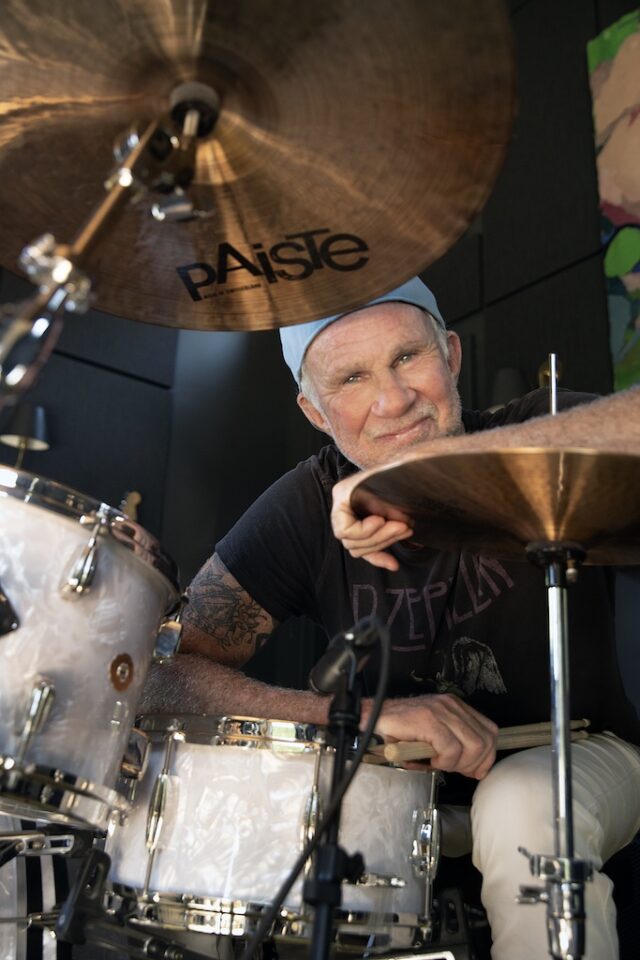
Chad Smith’s music barn sits behind his home overlooking the bay in Montauk—a place he never set foot in until he met his wife, Nancy, who spent childhood summers here. When they came to look at the property, the house itself wasn’t much to look at. The open water, the privacy and the light won him over instantly. Smith grew up on a lake in Michigan, and later lived on the beach in Malibu. His father had a saying: “The scenery is always changing.” Water, one way or another, has followed him his whole life.
These days, it’s not just water. It’s Nancy, their kids, the dogs, and a cat named Lulu, who comes and goes as she pleases and—in Smith’s words—has “completely figured life out.”
For nearly four decades, Smith has driven the rhythm section of the Red Hot Chili Peppers. But increasingly, his attention is on something else: the Chad Smith Foundation, which he built around a simple fact of his own life. He started playing drums at age 7, without ever taking a private lesson. Everything he learned came from public school music class—and without it, he doesn’t know if he’d have graduated. The foundation, partnered with the Boys & Girls Clubs of Greater Milwaukee and run alongside his brother Brad and nephew Lewis, exists to make sure other kids get what he got: a teacher who shows up every week, an instrument in their hands, and somewhere to go. As Smith puts it, if he can help another kid find what music gave him, “that’s a pretty good legacy.”
PURIST: You’ve spent your life pursuing connection through music. What inspired you to create the Chad Smith Foundation?
CHAD SMITH: I’ve been playing drums since I was 7 years old, and I was incredibly lucky to discover what I loved so early in life. Music chose me. My older brother played guitar, and I grew up listening to his records, Led Zeppelin, The Who, Jimi Hendrix, Deep Purple, The Beatles and The Rolling Stones. Those drummers became my heroes, and I knew pretty quickly that this was what I wanted to do.
Music education is often treated as extracurricular, yet for so many people it becomes identity, purpose—even survival. Why do you think music matters so deeply?
Music is universal. I don’t know anyone who truly doesn’t respond to it. I’ve been fortunate enough to travel the world with the Chili Peppers, and whether we’re playing Japan, Bosnia or South America, people connect. It doesn’t matter what language they speak. For a couple of hours, they’re completely present. They’re sharing something joyful together.
That’s a beautiful thing, especially now when the world feels so divided. Music creates a human connection that crosses every border. That’s also the heart of the foundation. We want kids to experience that connection, not just by listening to music, but by making it.
How does the foundation turn that philosophy into action?
We’ve been fortunate to receive donated instruments and equipment through friends and companies I’ve worked with throughout my career, but we quickly realized that gear isn’t enough. The real key is great teachers.
Kids need someone who’s there every week, someone who inspires them and keeps them coming back. So we’re investing in teachers, helping college students earn credit while they teach, and creating opportunities through organizations like NAMM [National Association of Music Merchants] and Live Nation. The goal is consistency, because that’s what builds trust.
When kids have a safe place to go after school—where they can play music, make friends and be creative—amazing things start to happen. We also offer scholarships that support students through college if they want to pursue music, whether as performers, producers, engineers or educators. We started with the University of Michigan, I grew up in metro Detroit, and the University of Minnesota, where both of my parents went to school. We’re still growing. It’s a marathon, not a sprint, but every year we’re able to do a little more, and that’s incredibly rewarding.
We live in a world of constant digital distraction. As a parent yourself, what do you hope young musicians gain from simply playing together in the same room?
First and foremost, it has to be fun. That’s why we say you don’t work music, you play music. When you’re young, you want that first experience to be exciting. You meet other kids who love the same things, you start a band, you make terrible demos together—that’s part of the magic.
Technology is amazing, and I love electronic music, too. But there’s something irreplaceable about people playing together in the same room. You learn to listen, communicate and support each other. That’s where friendships are built, and that’s where the music really comes alive. And honestly, I’d love to see more young rock bands. There’s always room for the next generation to come along and surprise us.
Drumming looks intensely physical, but it also seems deeply meditative. Is it athleticism, therapy, spirituality or all of the above?
Definitely all of the above. Physically, you have to be an athlete to play the way I do. I’ve always loved the power of rock drumming and what it brings to a band, but to sustain that energy for two hours onstage takes preparation.
When I was in my 20s, I’d party all night and the show would interrupt the party. Now it’s the opposite. Everything revolves around performing at our best—how we sleep, what we eat and how we train. We joke that we’re in the Chili Peppers’ “boring years,” but we take our live shows seriously because we owe that to the audience.
I remember seeing you after a concert with ice packs wrapped around your wrists. It looked like watching an athlete recover after a game.
That’s exactly what it is. People don’t always realize how physical drumming is, especially with the way our band performs. There’s a lot of movement and a lot of energy. But beyond the physical, there’s something deeply spiritual about playing with musicians you’ve shared a lifetime with. When we’re completely locked in onstage, there’s a connection that’s hard to describe. The audience feels it, too. It becomes an incredible exchange of energy. Flea [the Chili Peppers’ bassist] and I even have a name for those moments; we call it “drooving.” You’re grooving so hard you’re practically drooling. You’re completely immersed. Nothing else exists. Those moments don’t happen every day, which is exactly what makes them so special. For me, there’s no better feeling.
You’ve lived a remarkably loud life professionally. What brings you quiet now?
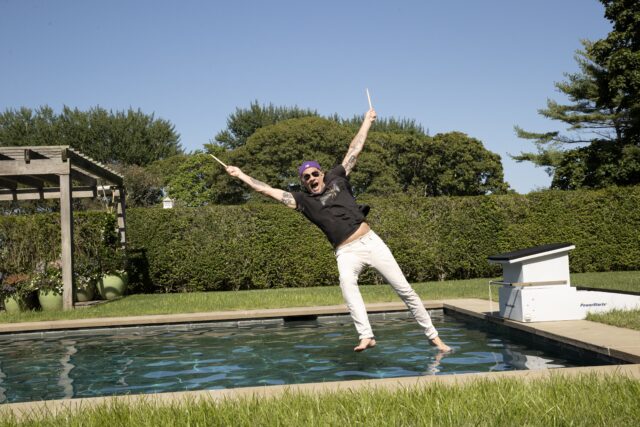
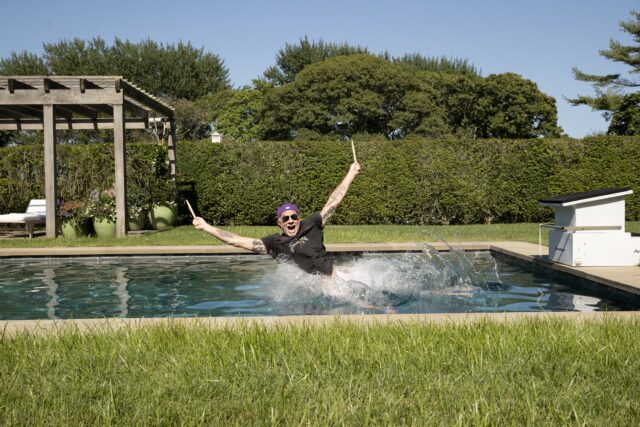
Well, not the tinnitus. [Laughs.] Seriously, though, I’ve learned that balance is everything. People assume I’m loud because of what I do, but I’m actually pretty introverted. I love being around people, but I also need time to recharge. I love being home with Nancy, our kids and our animals. Life can be incredibly stimulating when your job puts you in front of thousands of people, so being able to step away from that is important.
We’re sitting here in your music barn overlooking the bay in Montauk. What was it about this place that made you want to call it home?
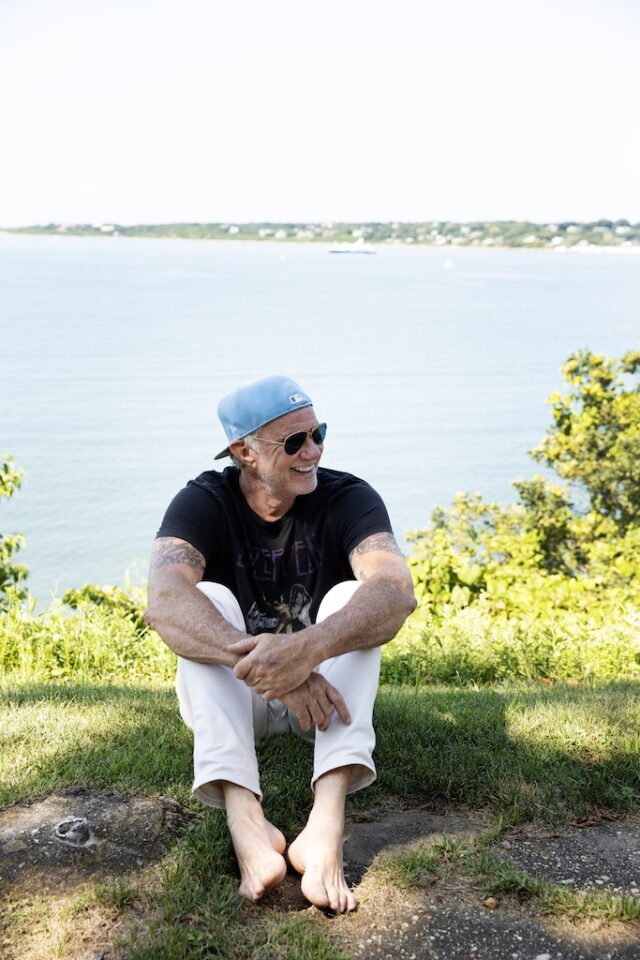
I’ve always been drawn to the water. I grew up in Michigan on a lake, and we lived on the beach in Malibu. There’s a real energy to being near water. Montauk has that same feeling. The light is extraordinary, and there’s a creative spirit here that’s drawn artists for generations. We only spend a few months here each year, which makes everyone appreciate summer that much more.
It seems to encourage people to slow down.
It really does. You walk outside, look at the water, and everything settles down a little. That’s important for me because my life is usually the opposite of quiet. When I’m here, I can make music, spend time with my family, take the dogs out and just be present.
If you’re fortunate enough to be part of a community like this, I think it’s important to give something back. We’ve supported the Montauk Skate Park, local projects and charity events over the years. Whether it’s here or through the foundation, every little bit matters. chadsmithfoundation.org
Explore more in Entertainment at The Purist.
Never miss an issue—join The Purist community.