








By Ray Rogers
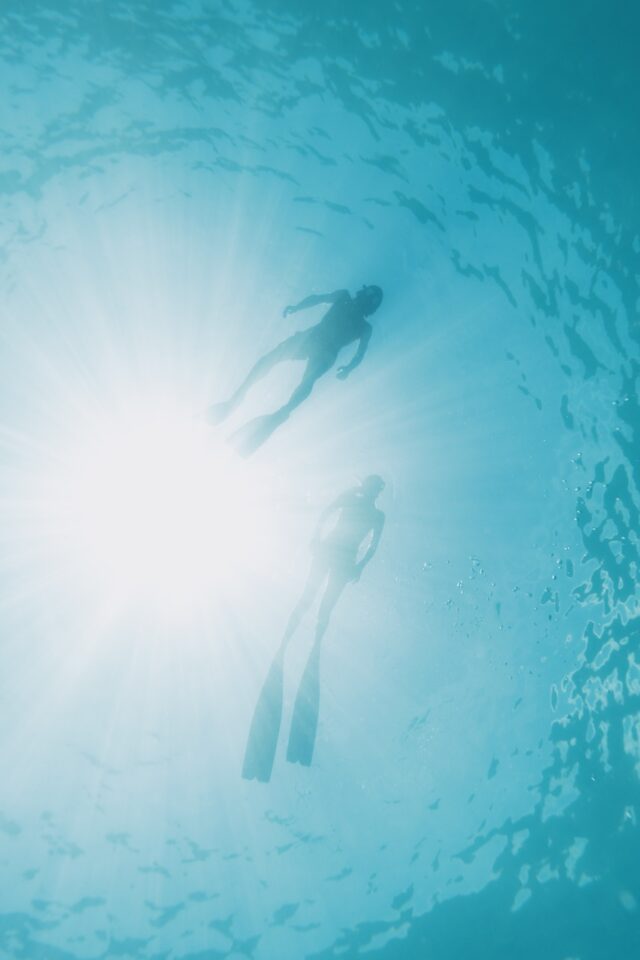
Blip. Bleep. Blip-blip. That’s the sound of dolphins speaking underwater—almost like an old-school game of Pong on your childhood Atari. Off the west coast of Mexico, on a small motorboat called Chispita—“Little Spark”—we are surrounded by hundreds of dolphins swimming in the wild. Young ones pop fully out of the water, twirling midair; dozens more surf the boat’s wake like regulars catching a wave. Four words changed everything: “Can we jump in?” The captain obliged without hesitation.
Underwater, the world reorganized itself. The sonar of these magnificent creatures scanned our bodies in real time—an alien language in the deep sea, intimate and electric. Back on deck, sunned and in a state of awe, we noshed on crudité, hummus and fresh ceviche while the dolphins below feasted on sardines. It was one of several “Is this real or is it AI?” pinch-me moments on a journey through two of Mexico’s most exclusive, extraordinary properties: Cuixmala, on the Pacific coast of Jalisco, and its mountain sister, Hacienda de San Antonio—a short hop away by private plane.
 Cuixmala: The Soul of the Sun
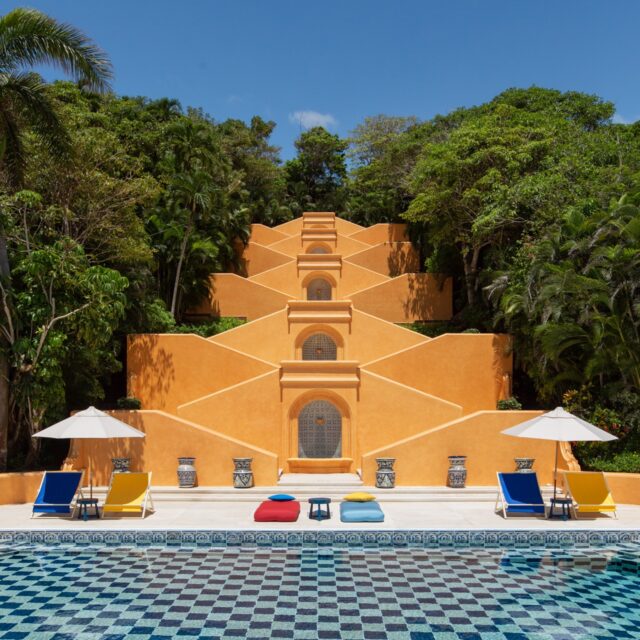
Cuixmala is a visual feast, a riot of saturated color that feels both ancient and alive. Pink floors. Orange walls. Rich red couches. Even the food participates: a golden ochre tomato gazpacho arrives at the lunch table in perfect chromatic harmony with the resort’s painted facades. The whole place has the aesthetic confidence of somewhere that has never once second-guessed itself. Across the 25,000-acre estate, roughly 40 rooms range from suites in the original Moorish-castle main house to fully staffed private villas with infinity pools and dedicated chefs.
The property is a biological sanctuary in the most literal sense. On a lagoon boat tour, we encountered some of the over 250 species of birds that call this place home: roseate spoonbills whose pink plumage comes from the shellfish they eat; white birds with funky tufted hairdos and peculiar, comedic songs; blue herons moving like slow ghosts through the reeds—all of them Chatty Cathys, filling the air with guttural laughs, grunts and birdsong. And below the surface, 700 crocodiles, whose shifty eyes slipped silently beneath the water as the boat drew near. On horseback (mine was a steady soul named Pacqual), we rode out to mingle with the 51 zebras and 18 antelopes that roam the estate’s coastal fields.
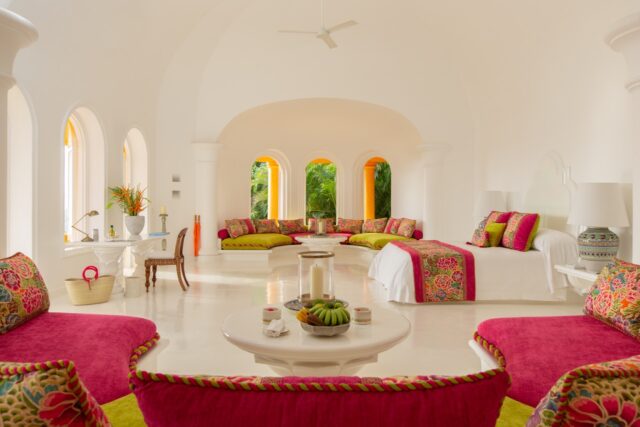 This is some serious “White Lotus”-level grandeur—but executed with a confidence that makes it feel completely natural. That confidence belongs in no small part to Alix Goldsmith Marcaccini, whose impeccable eye threads through every corner of both artfully designed properties. Her father, Sir James Goldsmith, built Cuixmala as a private family retreat in the early 1990s with a vision for the land that was as much wildlife preserve as resort—which explains the zebras. The seclusion and discretion have long made it a refuge for those who require both: Madonna, Mick Jagger and Robert Redford have all found their way here, along with models, politicians and anyone else for whom privacy is its own luxury.
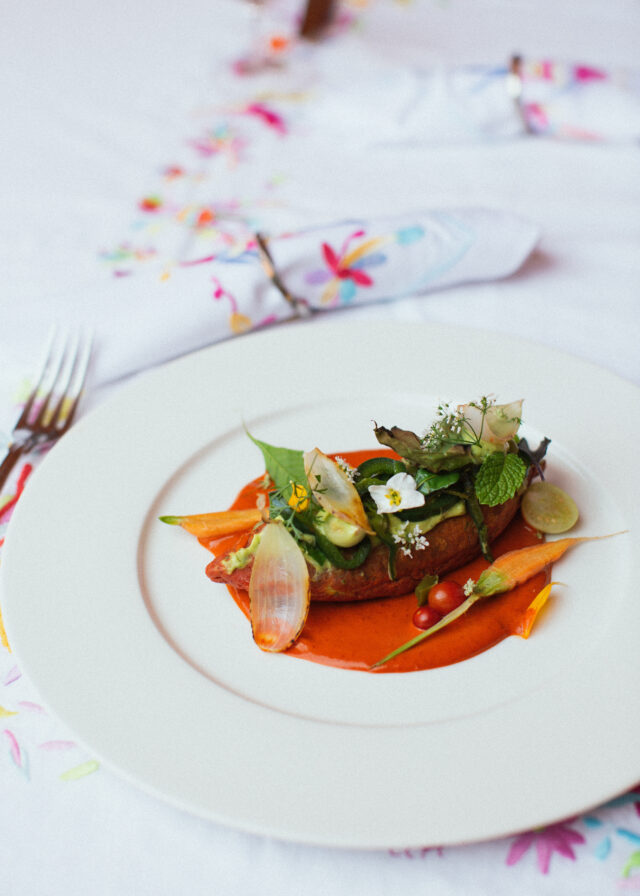 This is a place that specializes in “event” excursions, many centered around meals. Even a casual breakfast on the main terrace delivered: zebras grazing at a polite distance, coffee that somehow tasted better for it, a pastry flecked with gold leaf and stuffed with lime crème. Dinner was a beach bonfire affair—freshly grilled kebabs, sparks climbing toward the stars as the Pacific turned copper. Mornings began with yoga on the hillside pavilion, the surf crashing below. After an evening sound bath, the practitioner invited us to stand inside his giant singing bowls—the vibrations didn’t just resonate, they seemed to recalibrate our internal energy.
Then there are the gardens. Managed by a staff of 11, every seed is planted according to the cycles of the moon. The gardens yield cacao, starfruit, Brazilian cherries and seven varieties of banana. We tasted cinnamon stripped straight from the bark, drank fresh coconut water followed by the fermented meat of the coconut, and wandered through an aromatic garden laid out as a mandala—fragrant with mint, chocolate mint and Mexican oregano. It sounds like a fever dream. It wasn’t.
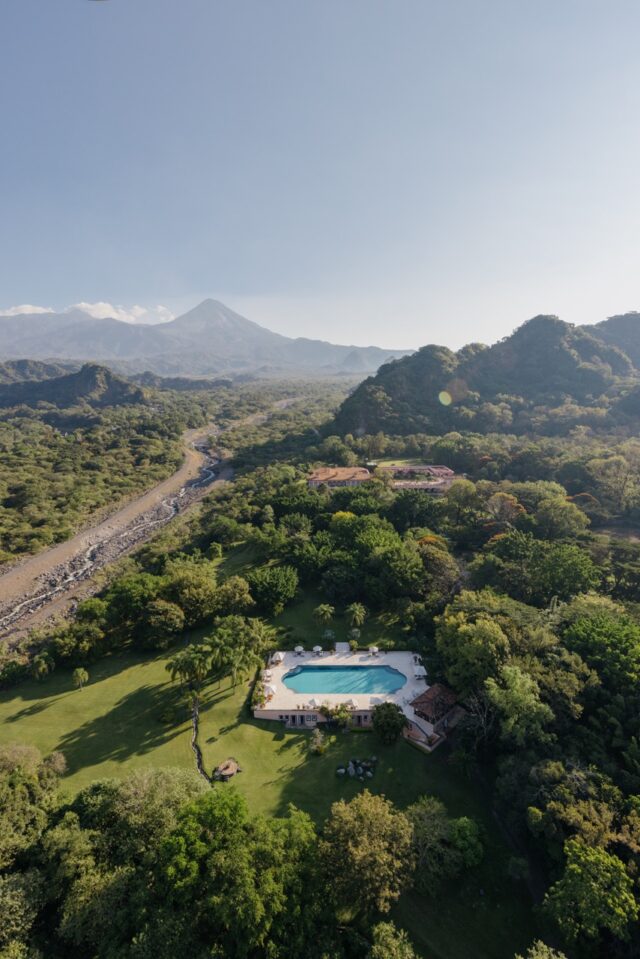 Hacienda de San Antonio: Mountain Majesty
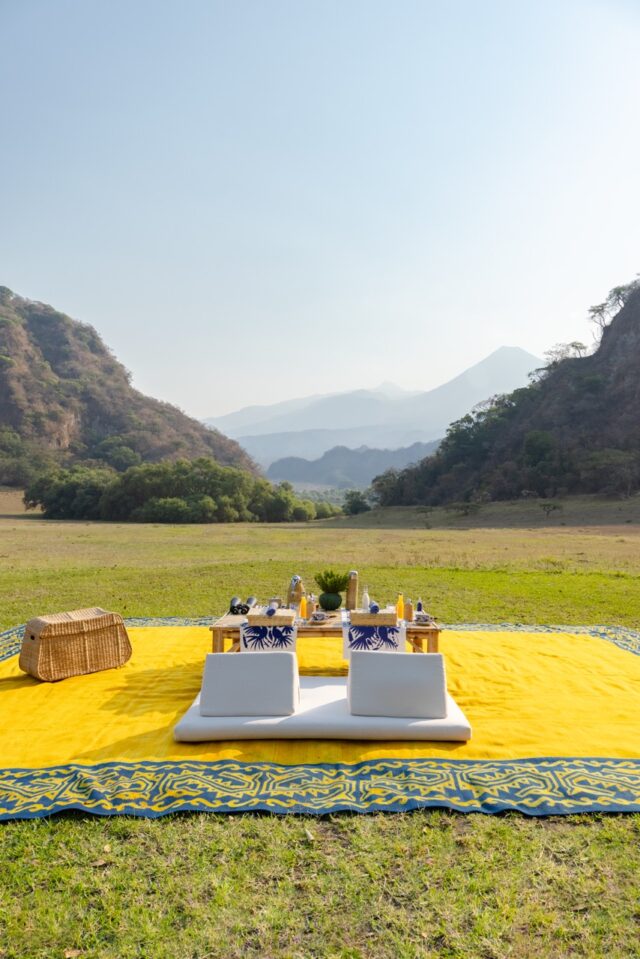
The transition from coast to mountains arrives like a change in key. Hacienda de San Antonio sits on 11,100 acres of highland terrain, staffed by 200 people, anchored by 400-year-old Tescalama trees, and defined by a sense of vastness we felt in our chests. After landing on a small grass strip, we were driven to a picnic lunch laid out in a nearby open field, the mountains stacked all around us, wild horses roaming free through the pastures. We felt the vastness before we’d even unpacked—and the 25 individually designed suites, some with volcano views, others gazing toward the river valley, the most generous with wraparound terraces and stone fireplaces, manage to feel both grand and deeply personal. Working with designer Armand Aubery, Goldsmith Marcaccini wove together Oaxacan hand-woven wool rugs, Michoacán ceramics, antique wooden rocking horses and pieces from the family’s own art collection—every doorknob and tile hand-selected to sit naturally within the original colonial bones of the place.
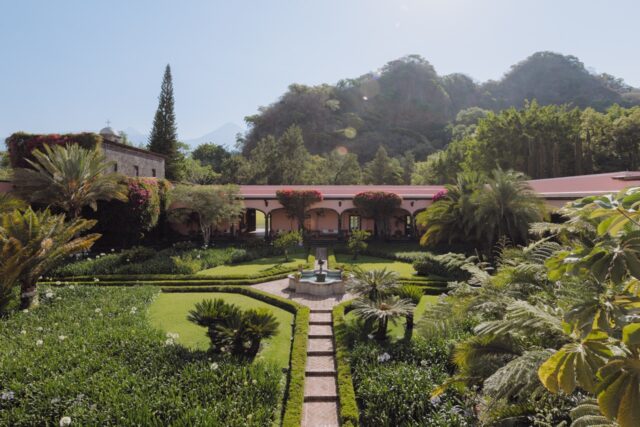 The Hacienda is also a working ranch and a culinary powerhouse. The fromage fridge houses 19 varieties of cheese. The biodynamic farm—no insecticides, and like its sister property, everything planted by the cycles of the moon—produces the strawberries, mangoes and tamarind used in the kitchen. Forty workers pick coffee beans by hand. We took a fast-clip gallop through the property on horseback, though my mount Santabo had his own agenda, which mostly involved snacking on leaves along the trail. A trot through a magnificent 100-year-old bamboo-lined avenue took us to a picturesque waterfall—the canopy so dense and tall it felt like riding through a cathedral.
The morning centerpiece was the floating raft breakfast—towed out onto the lagoon by a solar-powered tugboat, to a curated soundtrack of Caetano Veloso, Grace Jones and Jeff Buckley. “The Power of Love” played while we floated, coffee in hand, mountains rising in the distance. It felt like a scene out of a Fellini movie—and yet, there we were.
 The trip concluded as it began: with a touch of surrealism. We departed in a 1959 four-seater, its tail painted with a vintage, red-jumpsuit-clad lady parachuter, ascending slowly over the protected coastline. Looking down at the vast ecosystems—the lagoons, the mountains, the Pacific—I kept waiting for the spell to break. Below, somewhere, Santabo was grazing, the dolphins were still at it, and the crocodiles kept their silent watch.
Explore more in Mindful Travel at The Purist.
Never miss an issue—join The Purist community.