








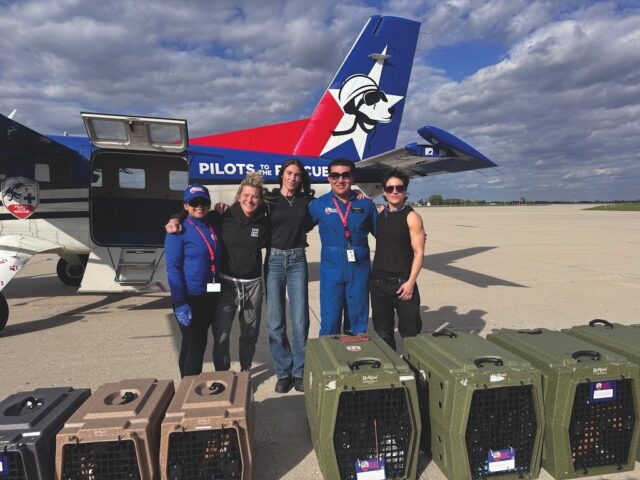
By Holly Rilinger, as told to Ray Rogers
I am used to pushing. As a strength coach, founder of the Lifted Method and a former professional basketball player, my entire life has been built around strength, energy and driving people past their limits. But nothing in my life—no game, no workout—could have prepared me for the literal battlefield I encountered when I decided to put my body on the line for animal rescue.
I’ve always loved dogs, but for a long time, I didn’t know any better and bought from breeders. Then, during COVID, down in the Dominican Republic, I came across two puppies on the beach. I adopted them both—my chihuahuas, Rocco and Luna. I started looking into the numbers: we euthanize an estimated million dogs a year in the U.S. alone. From there, I started fostering with rescues like Second Chance Rescue and Wags and Walks, and volunteering at the Animal Rescue Fund of the Hamptons (ARF). When I found out that beagles were still being bred for laboratory testing in this country, I knew I had to get involved.
That is how I found myself flying to Ridglan Farms, a dog-breeding and research facility in Blue Mounds, Wisconsin. There were former Marines and Army veterans there who told me the adrenaline was as intense as going to war.
We had been asked to choose our comfort level before arriving: red, orange or yellow. Red meant physically going in to remove dogs, with the risk of a felony charge. Yellow meant ground support. I chose red. I wanted to be there when the doors opened. But going in, I’d already decided I would not get arrested, whatever else happened. The plan was for Wayne Hsiung, the attorney and activist leading the action, to approach the police, hand over a folder documenting more than 300 welfare violations at Ridglan, and explain we were acting under a legal loophole. Instead, the moment Wayne spoke to the officer, he was arrested. Our leader was gone before we’d even reached the fence.
When we arrived, the air was already thick with smoke—pepper spray and tear gas, launched at a crowd that hadn’t yet done anything. The facility looked like a castle. Men with guns stood everywhere.
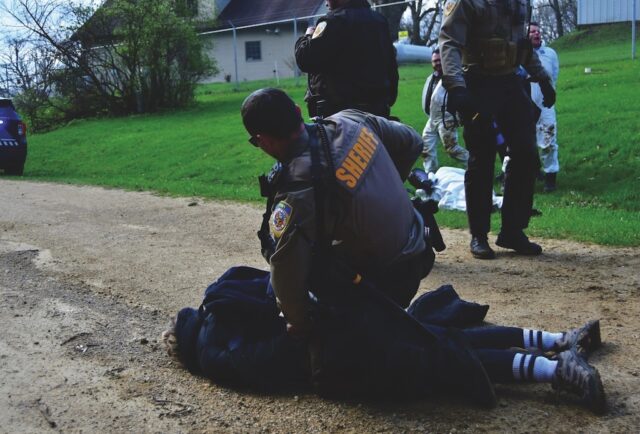
Within five minutes of stepping out of the van, I was tackled with brute force. I consider myself a strong person. In my mind, I can compete with anybody. That’s a fault. You cannot compete with an armed 200-pound man. He body-slammed me to the ground, drove his knee into the back of my skull, pulled my head back by my hair, and sprayed Mace in my face at point-blank range. As he zip-tied my hands and threatened to tase me, I screamed, “No, no, no.” I wasn’t resisting. I couldn’t breathe, and I couldn’t open my eyes for an hour. I crawled away blindly until some advocates laid me on the ground and poured saline into my eyes.
My friend Liz Liguori had it worse. She ran into a second line of defense, hands raised, and an officer smashed her in the face with a can of bear spray, breaking her nose. Blinded, she crawled away and fell into one of the trenches—which, we later learned, had been intentionally filled with imported, bacteria-laced manure to deter exactly this. It took weeks for the physical damage to clear—the Mace and pepper spray burned our skin and lungs for days, and Liz needed medical care for her nose and the exposure from the trench.
For the rest of that day, we stood back at the road, technically peaceful but still targets—they kept shooting pepper spray and rubber bullets at us even from a distance. Family members of the owner rode around on four-wheelers the whole time, taunting and yelling. One of them, Jerry Blizzard, is the Blue Mounds town constable and the Ridglan Farms owner’s son-in-law. I asked him directly how it felt to abuse animals. He told me, “I fucking love it.”
We left that day with nothing. Not one dog. I remember thinking, what was it for? Standing in that field, empty-handed, I didn’t feel righteous. I felt defeated.
Then the tide turned. The public pressure and legal scrutiny that followed the rescue mission were enormous, and Ridglan agreed to surrender its breeding license and release its dogs.
A few weeks after being body-slammed on that same dirt, Liz and I returned—legally this time, with NYC’s Second Chance Rescue—to a holding area off-site, where hundreds of the newly freed beagles were finally loose in the grass, some feeling sun on their backs for the first time in their lives.
Then I saw him. Out of all those dogs—tricolor beagle after tricolor beagle—he was the only lemon, pale and golden, sitting alone in the corner with his nose pressed to the fence while the others ran wild around him. I named him Blondie. Looking at him, I felt an immediate, fierce commitment. I was never leaving him, I thought. We loaded 20 of the newly freed beagles into the transport van, Blondie among them, and started the drive east.
The drive home was a grueling 17 hours. Liz took the wheel the entire way despite her healing injuries, while I stayed in the back with the cargo, holding terrified puppies and cleaning up sickness. Blondie sat behind Liz’s seat the whole time, eyes locked on the corner of his crate. Every time I touched him, I repeated the same thing: “This is a freedom ride, buddy. You’re safe now.”
We brought five of those dogs back to the Hamptons with us. I adopted Blondie and renamed him Finn. The first 90 days were an emotional roller coaster. Finn didn’t know how to be a dog. Every unfamiliar sound—dropped keys, a closing door—sent him spiraling. Every morning, I could see it in his eyes: He had to relearn that I wasn’t going to hurt him. He searched constantly for a way out. He knew nothing from human hands but pain.
Goose, a pit bull-Lab mix who belongs to my business partner, Laura McGarrity, became the real breakthrough. Finn was terrified of me, but he trusted his own kind—he watched Goose move through the house, eat, play, and began to copy him. Goose brought the dog out of him.
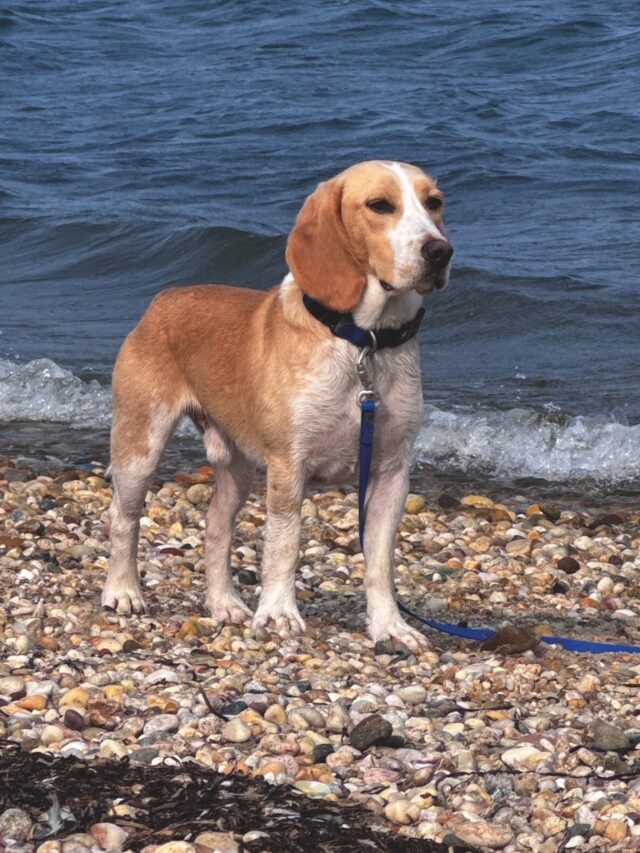
Then came the afternoon that changed everything. I took Finn to the beach in East Hampton. He’d spent his whole life in a metal cage; he’d never seen a body of water, let alone the ocean. I carried him to the shoreline, holding him against my chest as the waves rolled in. Before his paws even touched the sand, his legs started moving in midair—perfect, rhythmic paddle strokes. I stared down at him, my heart exploding, and gasped, “You wanna go swim, buddy?” This little soul, bred to be a research object, still carried the untamed instinct of a dog underneath it all. The cage hadn’t erased who he was meant to be.
Progress with Finn is still measured in millimeters, but the wins keep coming. He emerges from his crate on his own now. He plays with toys. He leans into me for comfort. The other night he fell into such a deep sleep beside me that he started snoring, and I just sat there in the dark and cried—because for the first time in his life, he felt safe enough to actually rest.
By this summer, approximately 1,500 beagles had been released from Ridglan Farms through the combined efforts of rescue organizations including Big Dog Ranch Rescue, and the facility’s breeding operation was shut down for good. Wayne Hsiung and dozens of other activists are still fighting felony charges for what they did that day. In a world that feels so divided, thousands of people came together anyway to save these dogs. Finn’s healing is going to be a long road. But every time I look at him—or remember him paddling in the ocean air for the first time—I know that patience and love win in the end.
Explore more in Mindfulness at The Purist.
Never miss an issue—join The Purist community.