








By Jenna Lebovits
PURIST: You started your career in fashion, opening a high-end lingerie boutique after studying economics and finance at Southern Methodist University, but then you quickly discovered you were more interested in designing the space itself. What was it about creating your first space that made you realize interior design was your calling?
NINA MAGON: Realizing that I could shape not only what someone saw, but how they felt. I believed fashion would be my creative outlet, but when I opened my boutique, I became more consumed by the environment surrounding the product. I obsessed over the lighting, the materials, the furniture, the placement of every object and even the way someone moved through the space. I began to understand that an interior could communicate an emotion before a single word was spoken.
That realization changed the trajectory of my life. Interior design allowed me to bring together creativity, psychology, culture, business and human behavior. I was no longer interested simply in making something beautiful. I became fascinated by the power of an environment to influence emotion, behavior and memory.
How do you design for those less tangible elements, and what can someone do at home to create that kind of multisensory environment?
We experience a space with our entire body, not simply with our eyes. Before we consciously register the furniture or finishes, we have already responded to the quality of the light, the acoustics, the temperature, the scent, the texture of the materials and the overall energy of the room.
Lighting should evolve throughout the day. Materials should feel as considered to the touch as they appear visually. Acoustics should soften the environment rather than compete with it. Scent can create memory and emotional association. Even negative space is essential because restraint gives both the eye and the mind somewhere to rest.
At home, I would begin with lighting. Maximize natural light during the day and create layers of softer, warmer illumination as evening approaches. Avoid relying on a single overhead source. Light is extraordinarily powerful because it can transform the emotional experience of a room without changing anything else within it.
Congratulations on your recent launch of KA Residences, which you’ve called your most significant project to date. What did you feel was missing from traditional luxury residences that inspired you to create something so different?
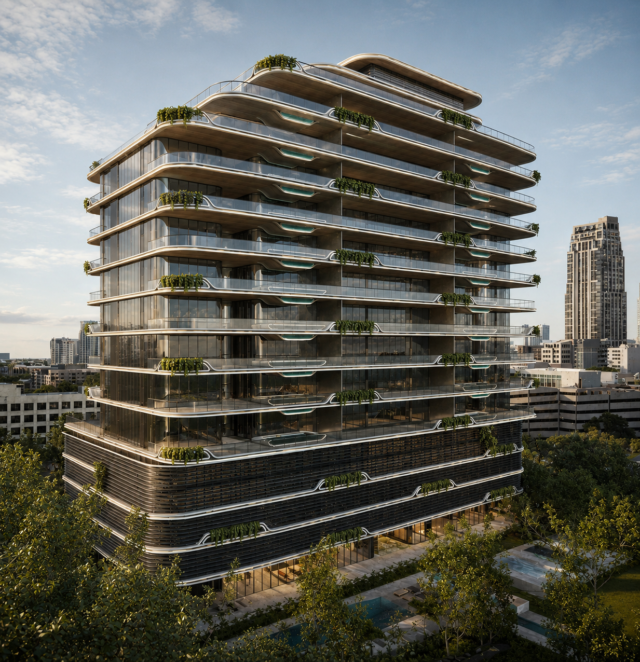
For decades, luxury residential design has largely been defined by what a home contains: extraordinary stone, collectible art, beautiful furnishings, expansive amenities, exceptional views. Those things remain meaningful, but I became interested in a more fundamental question: What is the home actually giving back to the person who lives there? That question became the foundation of KA.
Wellness in traditional residential developments is often treated as a destination. You leave your residence to visit the gym, the spa, a treatment room or another shared amenity. With KA, we wanted to reverse that relationship and bring wellness into the private realm of the home, allowing it to become part of the architecture and the rhythm of everyday life. We are creating an ecosystem in which design, wellness, technology, hospitality, privacy and service operate together rather than independently.
For me, this represents an evolution in the definition of luxury. It becomes less about accumulation and more about optimization: how intelligently can your environment support your energy, your health, your privacy, your time and ultimately the way you want to live?
Tell us about the ancient Egyptian concept of “KA” and why it became the guiding idea behind the entire project.
In ancient Egyptian belief, the KA represented the vital life force of an individual. When we discovered that meaning, it immediately resonated with what we wanted these residences to represent.
At its core, KA is based on the belief that our surroundings are not passive. The spaces we inhabit can influence our energy, our behavior, our sense of calm, our ability to restore and the rituals we create around our lives. The name gave us a framework for expressing that philosophy through architecture and design. Rather than asking how impressive a residence can appear from the outside, we began asking how deeply it could support the person living within it.
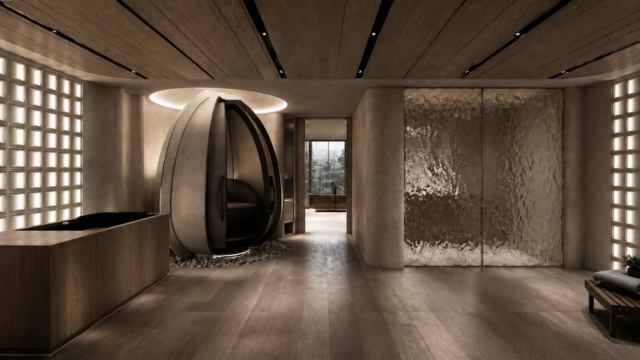
At the heart of every residence is your patented Merkaba Room, an innovative private wellness space that brings regenerative technologies directly into residences. Why was it important to make these technologies part of residents’ everyday lives, rather than something to seek out elsewhere?
The Merkaba Room began with a very simple idea: wellness becomes far more powerful when it can become ritual rather than appointment. People are increasingly investing in their well-being and exploring practices such as meditation, breathwork, red-light therapy, cold immersion, sauna and other restorative modalities. Yet these experiences are often fragmented across multiple destinations. We wanted to imagine what could happen if that entire experience became integrated into the home. The Merkaba Room is conceived as a private sanctuary for restoration. Technology is certainly part of it, but technology alone was never the objective. We considered controlled light, acoustics, materiality, temperature, sensory experience and space for stillness as one holistic environment.
I did not want to create a room filled with wellness equipment. I wanted to create a space that changes your state of being when you enter it.

Beyond the Merkaba Room, how is wellness woven into the everyday?
At KA, wellness begins long before you enter the Merkaba Room. It is embedded into the architecture through light, acoustics, air, water, movement, privacy, landscape, materiality and the transitions between spaces. We are considering how light can respond more naturally to the body’s rhythm throughout the day, how acoustics can reduce unnecessary stimulation, how materials can create a greater sense of calm and how spaces can encourage both movement and stillness. There are dedicated environments for fitness, swimming, yoga, restoration and social connection, but the larger philosophy is much more holistic.
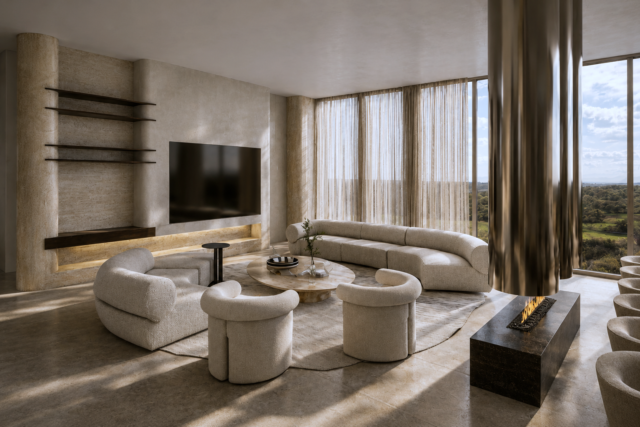
I believe the most sophisticated wellness is almost invisible. You should not feel as though your home is constantly instructing you to be well. Instead, the environment should quietly remove friction from your life and support better choices almost instinctively.
What does your own personal wellness space, or rituals, look like?
My life moves at an incredibly fast pace, so my personal definition of wellness has become increasingly connected to creating moments of stillness. I am very sensitive to my environment, particularly lighting, scent, sound, temperature and visual order. When I come home, I want the environment to signal a transition. I lower the lighting, eliminate unnecessary noise and gravitate toward spaces that feel calm, tactile and cocooning. Those seemingly small rituals have an enormous effect on how I feel.
I have also learned that wellness does not always need to involve doing more. Sometimes it is exactly the opposite. It is removing stimulation, putting the phone away, creating silence, slowing down and allowing yourself a moment in which nothing is being asked of you. That has influenced the way I design as well. We live in a culture of constant acceleration. To me, one of the greatest luxuries today is having an environment that gives you permission to disconnect from that intensity.
For the Purist reader looking to refresh their home without a total redesign, what’s one change that can make a space more supportive of well-being?
Change the lighting. Lighting is one of the most powerful, underestimated elements because it affects atmosphere, perception and the way we experience a space throughout the day. During daylight hours, allow as much natural light into the home as possible. As evening approaches, reduce the intensity and height of the light. Instead of relying on harsh overhead illumination, introduce warmer layers through lamps, sconces, concealed lighting and dimmable fixtures.
I often think of lighting as choreography. A home should not look or feel exactly the same at eight in the morning as it does at eight in the evening. The environment should evolve with you. You do not need to redesign an entire home to meaningfully change the way it feels. Sometimes wellness begins with something much simpler: creating an environment that understands the rhythm of the person living within it. liveka.com
Explore more in Architecture at The Purist.
Never miss an issue—join The Purist community.