








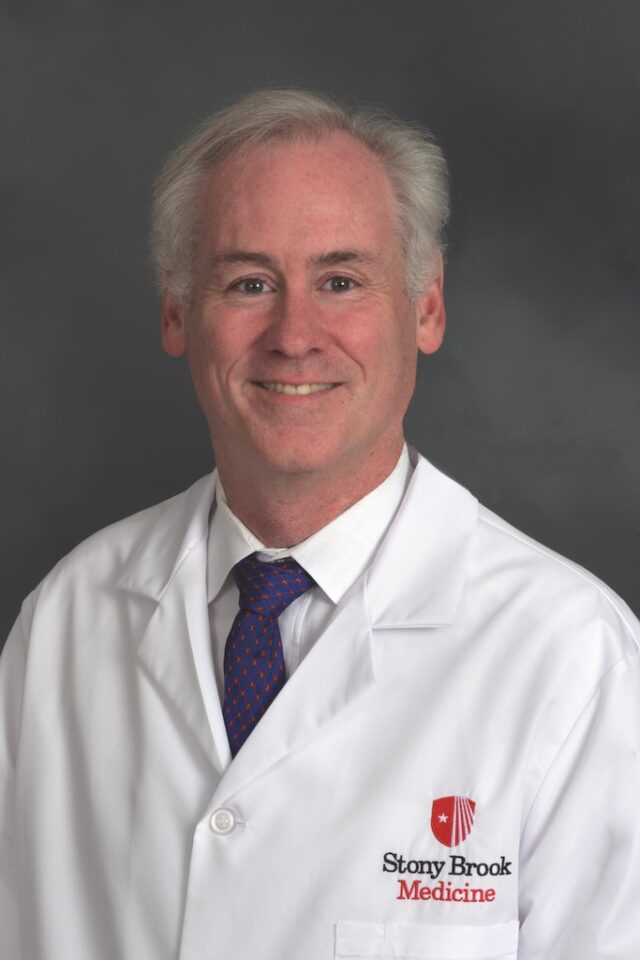
By Jim Servin
PURIST: Dr. Reilly, as the chief of cardiology at Stony Brook Southampton Hospital, you play a vital role in the Hamptons. Could you speak to the value of having high-quality advanced cardiology care locally?
DR. JOHN P. REILLY: It can be very stressful having a heart condition. Being able to get care close to home, readily available, is reassuring. It’s also important when urgent cardiac issues come up—when people have sudden onset of shortness of breath, palpitations or, heaven forbid, a heart attack, it’s not enough to be able to get to an urgent care. They have to be able to get to a hospital where real, definitive therapy can be provided. Having a hospital that is part of the system where you get the rest of your care is also helpful. The cardiologist can coordinate care with the primary care physician. Maybe you’re planning on having orthopedic surgery and need preoperative evaluation, or you also have an endocrinologic issue. That care can all be coordinated. Patients who are having a heart attack deserve immediate restoration of blood flow to minimize the injury. Being part of a larger system that can leverage expertise is really helpful for the community.
Tell us about the most effective non-pharmacologic treatments for hypertension.
Lifestyle modification is probably the most important thing for treatment of hypertension. Exercise is No. 1 on the list, as well as eating a heart-healthy diet, low in sodium. The average American consumes between 4,000 and 7,000 milligrams of sodium a day. We should be eating less than half of that—1,500 to 2,000 milligrams. Anything that comes in a box or a can or from the frozen food aisle in the supermarket has probably more sodium in it than you are expecting. Diets rich in fruits and vegetables with a lot of potassium are helpful for hypertension.
I would like to mention a procedure called renal denervation. Our kidneys are very involved in the regulation of our blood pressure, kind of like a thermostat; they help keep us at the right setting. Sometimes, some people have blood pressure that’s set too high. Renal denervation is similar to an angiogram procedure: We put a small, thin catheter up through the artery in the leg to the kidney artery, then apply some energy inside the artery to the kidney. It knocks out the nerves that run from the kidneys back along the kidney artery to the central nervous system, to interrupt that communication, so the kidneys can’t ask for too much blood pressure. This procedure has been studied for close to 20 years now as a catheter-based treatment. It got approved by the FDA about two years ago.
It’s been demonstrated to lower the systolic blood pressure, potentially resulting in a 20 percent reduction in the risk of future cardiac events, like heart attack or stroke. It’s a one-time procedure, with benefits that have been shown to last for three years or more. About three-quarters of patients have at least some response to the treatment. For people who are on three or four drugs for their blood pressure and are not getting it under control, this can be a great adjunctive therapy. It’s probably not going to get them completely off blood pressure medicine, but it may prevent the need for additional medicines.
You’ve mentioned that statistically, as many women die of heart disease as men. What should women be keeping in mind as they age?
Historically, heart disease has been thought of as a man’s disease. Women do tend to get heart disease later than men. If a man has heart disease before he’s 55, that’s considered young. A woman who gets it before 65 will be considered young. Women are often the caretakers in the family, so they’re making sure that the kids are OK and their spouse is OK, and maybe sometimes deferring their own care. We continue to remind them to prioritize themselves when it comes to cardiac risks.
How do you and Dr. Gill coordinate care?
There’s a lot of overlap between patients who need vascular surgery and Dr. Gill’s experience, and cardiology patients. We share a lot of those patients. Many times the cardiologist works to try and help improve those risk factors for heart and vascular disease, like controlling cholesterol and blood pressure, to hopefully delay or prevent patients from needing the surgery that Dr. Gill is expert at.
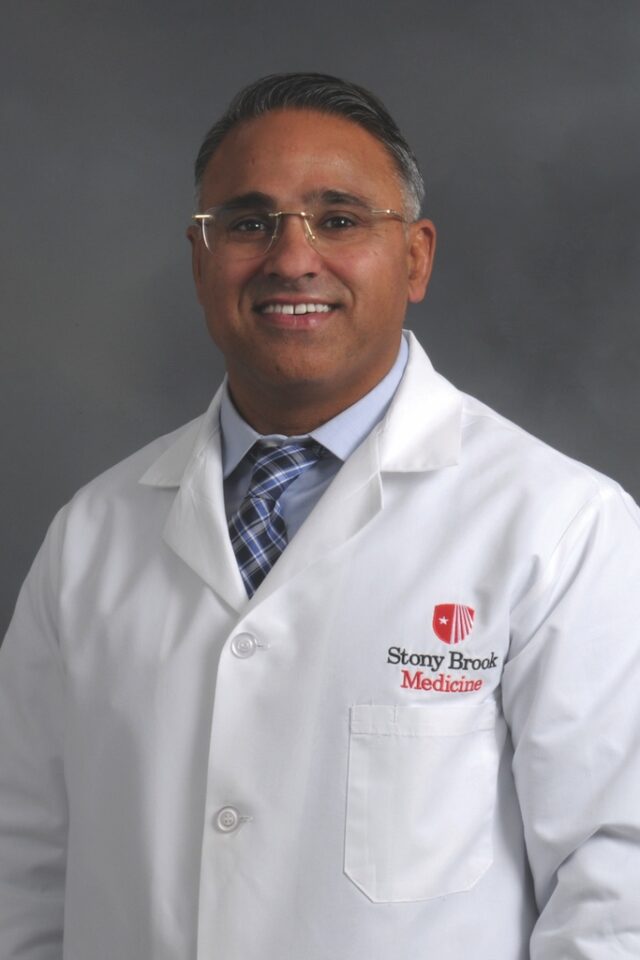
PURIST: Dr. Gurpreet Gill, as a vascular surgeon at Stony Brook Medicine, could you share with readers what they need to know most right now about vascular health?
DR. GURPREET GILL: To be winter-specific, sometimes patients get a flare-up of Raynaud’s, a vascular problem, during cold, damp weather. Working in the Hamptons, the North Fork and South Fork, the most common problems that we see are from patients who are smokers. They have pain when they walk. It’s called claudication: cramping in their calves, a burning sensation. If patients have a history of smoking, or a family history of aneurysms, they and their siblings should be screened for aneurysms in the abdomen and in the lower extremities.
Peripheral artery disease and aneurysm disease are the sorts of things we treat quite often at this hospital. The other problem that we see is venous insufficiency. It’s very common; 1 in 6 Americans have it. It’s underdiagnosed, and patients live with symptoms of leg heaviness, fatigue and swelling, especially at the end of the day. I see a lot of patients who are at a very late stage of this problem. Very well-educated patients who just ignore it. And now at age 80, 90, when they have wounds or pain or their skin is getting discolored, then they get worried. For patients who have a history of smoking, risk factors overlap between vascular disease and cardiac disease. Patients with some sort of heart disease should be evaluated at least once by a vascular surgeon for any blockages in the arteries. A cardiologist will pick up on these things. Anybody who is seeing a heart doctor should be evaluated by a vascular surgeon; the risk factors are the same.
What does teamwork with the cardiology side look like for your patients?
I work very closely with Dr. Reilly. He will call me if he has a patient who needs to be treated for blockages in the legs. I always will need a cardiac clearance on a patient who has vascular disease. Dr. Reilly, Dr. Gujan Joshi, who’s our new cardiologist, Dr. Travis Bench and Dr. Dhavel Patel are the four cardiologists we have in this area. I work with all of them very closely.
How can readers take the best care of their vascular health?
They should be seeing their primary care physician, watching their hemoglobin, being evaluated for diabetes, maintaining healthy blood pressure and cholesterol, eating a Mediterranean diet and exercising. Don’t smoke. Smoking is the No. 1 reason vascular surgery exists. Nicotine hardens arteries, which leads to the blood pressure rising, plaque buildup and faster aging.
If patients have issues, how can you and the hospital best treat them?
The whole goal is preventive medicine, right? My appeal and approach to all the primary care physicians is, call us early so we can assess patients early and give them the right diagnosis. Once tissue damage happens without any blood flow and without proper care, then there’s irreversible damage. That’s how patients lose their limbs. Early referral, early treatment, early evaluation by a vascular surgeon or podiatrist is the key to better success.
Do you recommend non-pharmacologic approaches?
For vascular patients, exercise is key. Walking at a brisk pace, three to four times a week, 20 to 25 minutes at a time, should be the protocol for pretty much every patient. It keeps your heart healthy, the vascular systems and the legs healthy. If you can add a little bit of elevation to it, that’s even better. If you’re on a treadmill, go on an incline, 2.5 inches; that’s really good for weight loss, and you’re getting your heart muscles stronger. Southampton Hospital has the only peripheral artery disease rehab program [on the East End]. Our goal is to get patients in as much as we can.
Tell us about Stony Brook’s new Heart and Vascular Institute.
The building has a state-of-the-art office, and a very good space for ultrasound sonographers. Before this, space was a problem in Southampton. The new facility is an independent space, with adequate rooms. We have the same kind of ultrasounds, and the same services, but it will be more efficient for the patients to be seen quickly and get the studies done in time.
At what age should people get serious about vascular testing?
At least around 50.
stonybrookmedicine.edu/heart-and-vascular
Explore more in Health at The Purist.
Never miss an issue—join The Purist community.