








By Ray Rogers
There’s a word Evanly Schindler keeps returning to: urgency. It’s the invisible thread connecting the abstract expressionists of the 1940s and ’50s to the artists making work right now, and it’s the force behind BlackBook Art Gallery’s 2026 season in Southampton.
“The emotional temperature is eerily similar,” Schindler says of the parallels between the postwar moment and the present. Where artists like Jackson Pollock and Lee Krasner were building meaning from the rubble of collapsed Old World structures—political, spiritual, aesthetic—today’s artists are navigating something equally unsettling: multiple wars, digital saturation, political polarization, the erosion of shared reality. The answer, both times, is the same—reinvention.
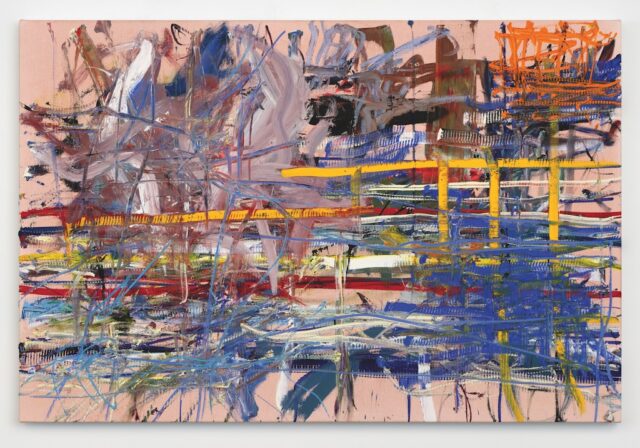
That conviction shapes The Lost Generation: Then and Now, BlackBook’s flagship summer exhibition, which brings New York School legends into conversation with contemporary heavyweights like Julie Mehretu and Rashid Johnson. Schindler is direct about what earns a contemporary artist a place on those walls: “It’s about a lived urgency that artists translate into a distinct visual language. Mehretu maps the velocity and instability of global systems—migration, geopolitics, architecture. Johnson constructs a material and psychological language from black soap, wax, text and grids.” What they share is a refusal to look backward.
The season’s second major show, Summer Figuration, pivots to a different kind of assertion. Where abstraction speaks to shared existential states, the figuration of Amy Sherald, Kerry James Marshall, and Toyin Ojih Odutola insists on the presence of the human form as a statement of visibility, authorship and control. The two shows are in conversation—deliberately so: what happens when meaning breaks down, and what happens when identity is asserted back into the void?
This curatorial logic flows directly from BlackBook’s origins. Schindler founded the magazine (where this writer worked from 2005-2009) in 1996 as a counterinstitution—”not anti-institutional, big difference”—that moved faster, gave visibility to outlier artists before they were absorbed into the mainstream, and grouped artists by what they had to say to each other, not by period or pedigree. The gallery is, in his words, a physical manifestation of that editorial sensibility. “The walls replace the page, the artists replace the contributors, and the exhibition becomes the editorial argument.”
The next chapter is Detroit, where Schindler and his business partner, Christos Moisides, who is at the heart of the city’s cultural renaissance, are set to open the new BlackBook Art Gallery in fall 2026. The city will further position itself as an art destination when the Detroit Salon opens in 2028. For Schindler and Moisides, the city’s Eastern Market carries the same electric, pregentrification energy that New York’s Meatpacking District held 25 years ago. The sales ethos aligns with the creative, says Moisides: “it’s high/low; blue chip (like Basquiat, de Kooning, Cecily Brown), and emerging (Elizabeth Neel, Shaina McCoy, Layo Bright, Michael Butler), with price points from thousands to millions.”
After nearly three decades, what remains most gratifying, Schindler says, is simpler than any curatorial thesis: “We never fully behaved the way we were supposed to, have a shit-ton of fun, and somehow that turned into longevity and success.” blackbookartgallery.com