








 By Erin Walsh
In my nearly two decades as a stylist, I’ve watched trends come and go. But recently, I noticed one that wasn’t fading away. Not the fashion kind. This trend is more universal (and more costly) than anything coming down the runway—and it has less to do with clothes than with our relationship to them. Here’s what I’ve observed: Every morning, most women pull something out of their closet that makes them feel bad about themselves, then spend the rest of the day tolerating that subpar feeling the way you might ignore a pebble in your shoe for way too long.
This daily habit is so ubiquitous, so normalized, that many women don’t even register it as a problem. But I do, because I’ve seen what’s possible when that pattern is broken—when someone opens their closet from a place of intention rather than dread, and walks out the door feeling like the truest version of themselves. I’ve watched it happen during fittings, on red carpets and in ordinary bedrooms, including my own. The transformative impact of dressing from a mindful and authentic place is undeniable—and more importantly, it is available to everyone regardless of budget, body type or how busy they are.
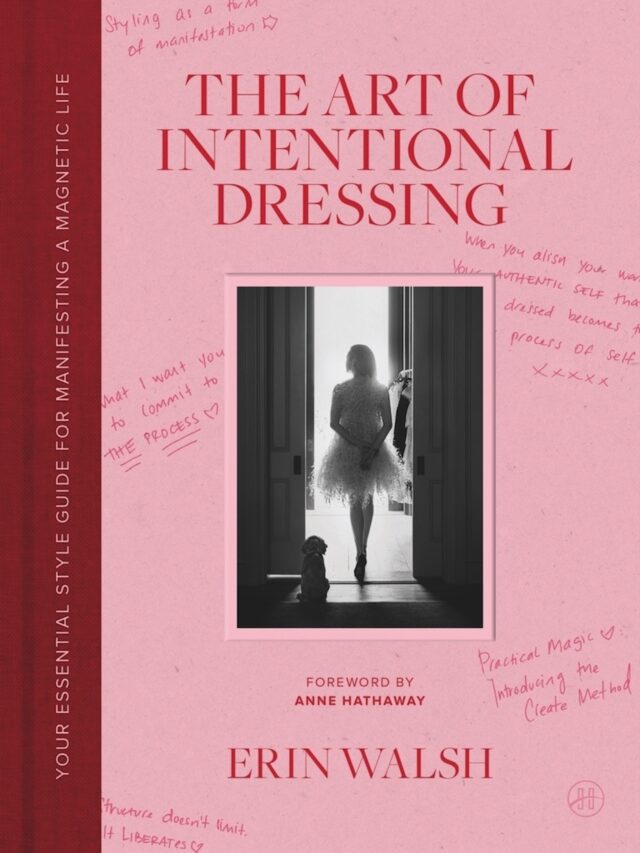
My passion around the metamorphic power of clothes is the reason I wrote my new book, The Art of Intentional Dressing. Getting dressed has the potential to bring joy, and I wanted (actually, I needed!) to share exactly how to harness it.
The Substance of Style
It’s easy to assume that what we wear is a somewhat superficial concern—not something that impacts our overall well-being like sleep, nutrition and exercise. But what you put on your body in the morning is as important as what you put in it, because your outfit sets the tone for your entire day. It influences your mood and how you show up in the world. When you leave the house feeling meh, it erodes your confidence, which leaks out in your interactions with others, creating a negative feedback loop. On the other hand, when your outer expression aligns with your inner truth, you stand taller. You speak more directly. You take up space differently. And that vibe generates what psychologists call a positive, upward spiral.
I didn’t always have language for explaining this, but I knew it intuitively. That’s why it made my heart swell several sizes when my client and soul-sister friend Anne Hathaway told The Hollywood Reporter: “Erin sees my idiosyncrasies as a strength.” That is the key—helping someone see themselves clearly enough to dress from that place. In the foreword to the book, Anne wrote: “As my stress about clothes has decreased, a certain boldness and joy has emerged. I find I am more adventurous, and that has made me connect more deeply to feeling powerful.”
Her admission reveals another piece of style intel: Whether we realize it or not, there’s a conversation happening between our clothing and our subconscious. In fact, some interesting research has been done around a psychological phenomenon called “enclothed cognition.” It has shown that the symbolic meaning you attach to clothing actually transforms your cognitive processes. When the researchers studying enclothed cognition discovered that participants performed differently in identical white coats simply because one was labeled a “doctor’s coat” and another a “painter’s coat,” they unveiled a profound truth: What we believe about clothing becomes part of our lived experience.
Why You Never Know What to Wear
There are dozens of reasons our closets confound us. To name just a few: Wardrobes have a tendency to become time capsules filled with clothes that reflect past selves…the corporate-era blazers, the single-and-dating dresses, the pandemic athleisure that stealthily took over 70 percent of available space. Also, we’ve all been seduced by trend algorithms and influencer content to buy things. We’ve let salespeople talk us into pieces that were never really us. And, we hold on to expensive shopping mistakes because the price tag makes them too guilt-provoking to release.
On a deeper level, what lives in our closets often reflects a misalignment between who we truly are inside and who we’re presenting to the world. But a closet stuffed with old personae, wrong sizes and guilt on hangers is not just clutter; it’s an energetic obstacle blockading your best self. No wonder we feel off before the day has even started!
The invitation I’m offering is to treat getting dressed as a daily wellness practice. As a genuine, grounded act of self-care that has also the power to magnetize your dreams. How so? Fashion is one place manifestation finds its physical form. The garments you choose each morning aren’t just covering your body; they’re programming your inner reality. Clothes and accessories can summon aspects of yourself you wish to cultivate and share with the world. In that way, your personal style can help move you in the direction of your desires.
My dressing method, Create, unlocks this power. I use it with every client I work with, famous or not. Create stands for Clarity. Ritual. Edit. Align. Truth. Expansion. The actions behind that acronym are the bedrock of my belief system and the basis of my book. I can’t fully explain it in the space we have here, but I’ll give you a healthy head start on how it works:
Get Grounded Before You Get Dressed
Before you even open your closet door, I want you to identify how you want to feel for the day ahead, not how you think you should look. This shift from dressing for others to dressing from yourself changes everything.
So, the question I want you to ask yourself isn’t what should I wear? It’s how do I want to feel? When you start there, with centered intention, your closet stops being a source of anxiety and turns into a portal of possibility. As my friend, renowned spiritual teacher Gabby Bernstein, framed it: “What you wear should be a means of manifesting because it’s part of the process of becoming the person you’re capable of being.”
To get grounded you might want to take a few minutes to settle your thoughts—stillness often helps us hear our inner wisdom more clearly. At other times, movement does that job. Somatic educator Lauren Roxburgh recommends a quick shake-out—gently bouncing, loosening your hands, arms and shoulders, then stretching and taking a few deep breaths. “The soul doesn’t speak in words,” says Roxburgh. “It speaks through sensation, tension and intuition—and fascia, the body’s intelligent web of connective tissue, is its messenger.” And because fascia holds stress and emotional memory, shaking things out before you get dressed means you’re choosing what to wear from a cleared body rather than an emotionally hijacked one.
If you’re having trouble identifying how you want to feel, I suggest choosing three simple words. My personal go-tos are: effortless, ease and elegance. Or centered, calm and held.
Edit Like a Stylist
Before a photo shoot, I set up the room: everything merchandised, excess edited out, organized so that there’s room to actually see what’s there. I want you to do the same exercise with your own wardrobe.
Take an afternoon—really block it out—and pull everything out of your closet. Then reintroduce pieces using simple questions to guide your decisions about what stays and what goes. Marie Kondo asked whether something sparked joy; I’d go further and ask you to consider whether a piece of clothing sparks possibility. Every morning is an opportunity to tell the world—and more importantly, yourself—who you are and who you’re becoming. Anything that consistently gets skipped, or that belongs to a version of yourself you’ve outgrown—release it, consign it, donate it, let it go.
Another dear client of mine, actress, comedian, producer and mother of three small children, Mindy Kaling, has developed a rule that exemplifies the power of intentional systems: “When I buy something for myself, I need to wear it within 10 days, otherwise I have to return it,” she told me. “I just won’t let things sit in my closet. They have to be worn or they go back.” This rule creates accountability and prevents the accumulation of purchases that don’t integrate into your current life or serve in fueling the life you’re trying to create.
I suspect there’s often an instinct or inner knowing at work behind the hesitation to wear something. It’s data you can learn to read. Because ultimately, dressing with intention isn’t about looking any particular way. It’s about closing the gap between your inner truth and your outer expression, one day at a time. Operating this way empowers you to use clothes as a catalyst for self-growth—an entry point into a deeper exploration of how you want to live your life. The Art of Intentional Dressing is available now.