







By Ray Rogers
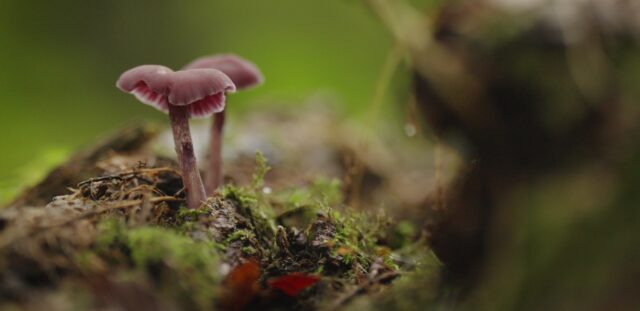
Kingdom Fungi unfolds at a languid pace: Long shots follow mushrooms breaking through soil and root networks spreading underground while the seasons turn around them. First-time director Josh Thompson follows four field mycologists—Nikki, Jasper, Max and Andy—through England, Chile and Bhutan, each devoted to the study of underground fungal networks that scientists are only beginning to understand. Purist sat down with Thompson to talk mycology, patience, and the hidden systems that shape life on Earth, ahead of the film’s premiere at the 34th annual Hamptons International Film Festival.
PURIST: How do you see field mycology functioning as a practice of mindfulness for the mycologists you followed?
JOSH THOMPSON: Field mycology is a wonderful way to get out in the woods exploring and “tuning out,” and as an avid amateur mycologist myself, I can speak firsthand about the mindfulness that being out in nature provides. I think in this day and age of competition coupled with relentless social media, crazy world politics and financial woes, it can get really overwhelming for some. Just this morning, after dropping my daughter off to school, I decided to take a walk through my local woodlands to see what fungi was popping up—we’ve had a long and overly hot summer here in the U.K., but fall is starting to settle in, bringing rain. For me, field mycology enables me to turn all that noise off—you are deep in the woodlands without signal, just listening and looking at everything around you. I don’t really think of anything; I just turn my attention to what’s growing around my feet, listening to the wind rustling through the leaves or the morning birds. It’s about being present in the moment, which we don’t really do anymore without some sort of distraction.
The film spends a lot of time on what mycelium networks do underground. What do you think that has to teach us about our own relationships?
Well, I think you can look at this a couple of different ways. The mycelium network acts a bit like how we use the internet (or how we should use the internet!)—connecting and sharing information such as messages and nutrients to make the ecosystem stronger. Making this film, I got to explore three totally unique fungi festivals in completely different parts of the world, where people from all areas come together to share their knowledge and education. It’s not capitalized on or exploited—no one is charged a subscription service or denied access to the information based on their creed. Everyone is there together, sharing and learning without prejudice. Community is key to understanding each other and makes us better when we all work together.
You filmed across England, Chile and Bhutan—three very different relationships to land and policy. What did that range show you about how unevenly the world protects fungal ecosystems?
England and Chile are making some huge advances in promoting and protecting fungal ecosystems. The Fungi Foundation, for example, is really spearheading this campaign and actively involved in speaking to governing bodies about turning the tide on public policy and global conservation. There is legal protection status when it comes to flora and fauna, but fungi is overlooked. There is a lack of understanding in what fungal ecosystems actually do and how interconnected everything is—and not just in forests. Take, for example, a farmer’s field, which is plowed, pumped with chemicals and then extensively farmed. It eventually loses all its bioavailability and natural organic matter and is unable to grow crops after a few cycles. You need living organisms and mycelium in the ground to encourage healthy soils. Rain washes off toxic fertilizers, which leak into our river systems, disrupting other delicate ecosystems—another huge problem in both the U.K. and other “developed” countries.
Bhutan has an amazing approach to land and policy when it comes to protection and sustainability. I believe the government mandates that 60 percent of the country is to stay forested, which means pristine and protected ecosystems where fungi flourish along with the flora and fauna. Foraging is monitored and cooperatives are in place to avoid exploitation, and some areas are out of bounds entirely aside from authorized locals—particularly the high-altitude cordyceps fungus. For a country deemed economically inferior to Western countries like the U.K., Bhutan is exceptionally rich in its environmental approach and is the world’s only carbon-negative nation.
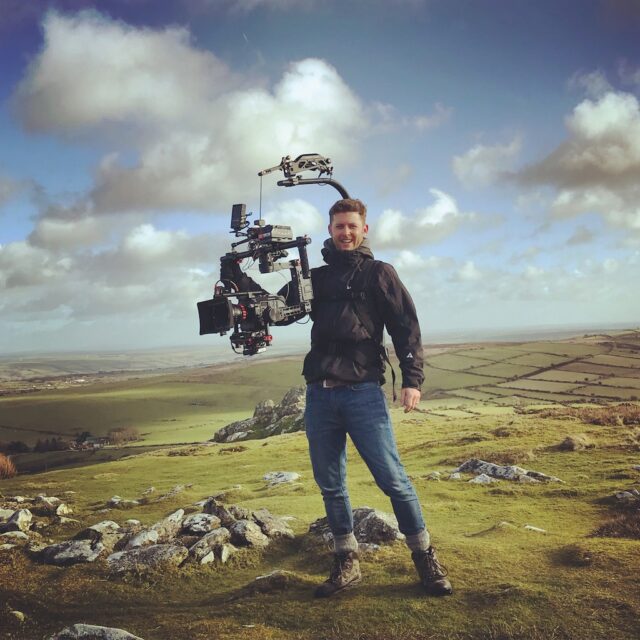
How long did it take to follow four mycologists across three continents, and what made fungi worth that kind of commitment?
I spent a year with Nikki, Jasper, Max and Andy filming the doc—not all the time, obviously, but mostly during the autumn season when fungi peaks in the U.K. The opportunities with Max in Bhutan and Nikki in Chile took place at other times throughout the year. I find fungi fascinating, so that’s where my commitment is. Initially I reached out via the British Mycological Society’s Facebook page (a hub where members can upload pictures of fungi to aid with identifications, etc.) looking for mycologists who might want to take part in some filmed forays where we could go out and identify species and create some social media films—something that combined my love of filmmaking with my passion for mycology. The four people who expressed interest are the same four people in the doc! Once we started filming, I got to know each of them and discovered they all had fascinating backgrounds and careers focused on everything fungi. I knew immediately this needed to be a film. As filming progressed, it drew attention and gained momentum, and was actively endorsed by the Fungi Foundation, giving it credibility.
Fungi have gone from a scientific niche to something people put in their coffee. What do you hope this film adds to that shift?
I’d love to see more money going toward their conservation and protection, to be honest—essentially that shift back to science. It’s great that there is a bigger awareness surrounding mushrooms and their health benefits, but it would be brilliant to channel funds to where it’s really needed: protecting habitats. If this film could help that in any way, it’s achieved its goal.
The film favors observation over dramatization. How did you resist the pull to make it more sensational?
I wanted it to be true to life—real facts, real people and real community, and avoiding stereotypes. There are so many incredible environmental documentaries out there with real messages, but the majority of factual programs now on streaming platforms are either highly dramatized true-crime horror stories or sensational nonsense like “Cake or Fake.” Is this really good watching? There are some wonderful fungi films out there, but there are also many which just focus on psychedelics. While we do mention them in Kingdom Fungi, I really wanted to avoid any stereotypes often associated with mushrooms, and instead highlight the science of identification, conservation and education.
What practices or shifts in perspective do you hope this film leaves people with after the credits roll?
I would like for people to stop and take a breath, and by that, I mean going out and enjoying nature in any way that works for them, and appreciating being there in that moment, whether that’s looking for mushrooms in the forest, going on a hike with friends or family, or cycling through your local nature reserve. If we can all appreciate the natural world around us a little more, then it might change the way we look at things in the future, especially when it comes to protecting it better.
You spent years in the field, often alone with a handful of mycologists in remote places. What’s it like handing that off to a festival audience for the first time?
A bit nervous, if I’m totally honest! But really excited to be coming over to the USA to be there in person for it. It’s also the beginning of another journey for the film, and hopefully, setting the foundations of my next fungi feature film.
Kingdom Fungi screens Saturday, Oct. 3, at 1:45PM at Sag Harbor Cinema, and Monday, Oct. 5, at 8:15PM at Regal UA East Hampton.
Explore more in Culture at The Purist.
Never miss an issue—join The Purist community.