







By Ray Rogers
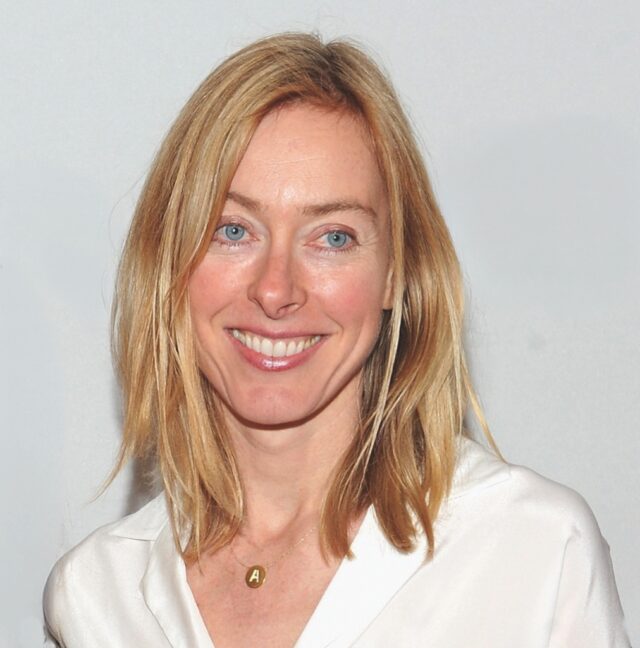
For over two decades, Anne Sundberg has documented some of the most consequential fights of the modern era—wrongful conviction in The Trials of Darryl Hunt, geopolitical upheaval in The Devil Came on Horseback, and reproductive rights in the Emmy-nominated Reversing Roe—all alongside her longtime directing and producing partner, Ricki Stern. In her new film, The Drug in Our Pocket, premiering at this year’s Hamptons International Film Festival, Sundberg shifts her lens from courtrooms and capitals to kids’ own daily lives, examining how smartphones have rewritten childhood and adolescent mental health. True to the character-first approach behind her intimate portraits like Joan Rivers: A Piece of Work and The Fashion Fund, the film embeds with a generation of young people and parents working to reclaim their attention, and their sense of self, from the pull of the feed.
PURIST: The title comes from something one of the young people in the film said. What was it about that phrase, in that moment, that made you know it belonged in the title?
ANNE SUNDBERG: Larissa (“Larz”) May was one of our first interviews for this film. She’s highly intelligent, ambitious, driven, and like the rest of us, completely susceptible to the dopamine hits and the energy that comes with connecting online. In our first sit-down with Larz, she shared her personal journey: a fast rise to online reach that came with a ferocious dark side. When things crashed down for her in college, doctors asked about all her habits, sex, drugs, sleep, alcohol, but no one asked her about “the drug in her pocket” that she could not put down.
For Larz, it was crystal clear that her time in digital worlds was at the core of her depression, and it put her on a path to talk with young people about digital wellness. Social media and time spent on our devices can be exactly that: a drug for our minds, our emotional development, our psyches. But for producer Beth Kojima and me, the connotations of a drug aren’t always negative. A drug can harm, but it can also help when used correctly, and we wanted to explore what this drug does to kids, and the rest of us, and how we navigate a life of constant digital connection.
Your earlier work confronts external, systemic battles: wrongful conviction, geopolitics, legislative change. What made you shift focus this time, to a fight playing out in kids’ everyday, waking lives?
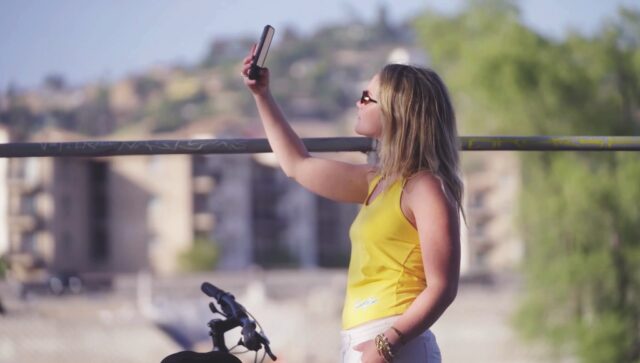
This film is very personal for us. Beth and I both have kids in the zone, ages 13 to 18, and this was the topic on everyone’s mind when we first connected about making it. Every parent we knew was talking about the “damn phones.” But it’s not the phone. The phone is a tool. It’s what gets loaded onto that phone, and how we use it. We are in a massive systemic fight, as big as anything out there: a fight for our attention, for how we engage with one another, and for our emotional and intellectual health. We wanted to ground this film in the voices of young people who learned things about themselves growing up online that they felt were important to share with other young people. Right now, film and visual mediums are the way to help young people reach each other.
What did you learn about what parents are up against, being, as you put it, the first generation tasked with protecting their kids’ mental health in a digital world they didn’t grow up navigating themselves?
One of the things that really hit me is that kids will always find a workaround if a parent says no. Kids are smart and crafty, and phones are part of their lives too. If a kid wants to do something online, they will find a way to do it. Almost everyone we spoke to feels the phones aren’t going away. They have been baked into our existence. We adults are just as guilty as our kids of losing ourselves in a digital existence.
The best thing we can do as parents right now is have fully open conversations with our kids that take the shame out of online experiences and platform use. Parents can talk about what they’re using, trying, enjoying, and where these platforms get it right and wrong, and ask the same of their kids. My hope is that young people develop a desire for agency in their own lives that makes them want to put the phone down and connect in real life.
Some of the most damning material in the film isn’t an interview, it’s Meta’s own internal messages, unsealed in litigation, with employees calling themselves “basically pushers.” How did you decide to use company documents like that alongside your interviews?
It was important for us to show that for decades, these companies have been aware of the harms. It fuels a sense of outrage at the fact that this is a wholly unregulated industry, with no regard for the health and safety of its youngest users, and it shows what whistleblowers like Arturo Béjar were up against inside Meta. When Arturo’s team, which was essentially responsible for user safety and integrity, was put under the growth team, it was game over. Warren Buffett’s business partner Charlie Munger put it so clearly: “Show me the incentive and I’ll show you the outcome.”
Since you finished the film, New Mexico Attorney General Raúl Torrez, who appears in the documentary, won a $375 million verdict against Meta—exactly the kind of accountability the film gestures toward. Do you see that as proof the system can hold these companies to account, or as a number too small to change how they operate?
Even the recent $17 billion Meta settlement, with all its contingencies, has been equated to the pain of a speeding ticket compared to the company’s annual revenue. Do these judgments hurt the companies? I don’t think so, not yet. This number is still too small to radically change how they operate. But there’s a much larger hurt that comes from the court of public opinion. Awareness of harm can be radical in shifting behavior. If you get enough penalties levied over a period of time, user and consumer behavior starts to shift. We now know how dirty the water is that we’ve been drinking. A lot of people draw the parallel to civil liability and the cigarette manufacturers: clear, causal science that a company was knowingly addicting and killing people. The lawsuits emerging now are painting a much clearer, more human picture of the harms that have come from social media.
You’ll be in the room for the film’s world premiere at HIFF. What are you expecting it to feel like, watching something this personal with an audience for the first time?
We can’t wait to bring this film to HIFF. The premiere is always an emotional roller coaster for me, a tremendous amount of nerves, but I’m always excited to talk with people after. It’s an incredible gift to hear what an audience is feeling when the lights come up. Given that our film is very much about finding ways to connect with each other, unmediated by technology, the experience of going to a movie together and sharing that is magic.
Explore more in Culture at The Purist.
Never miss an issue—join The Purist community.