








By Ray Rogers
“Do not pet the puma.”
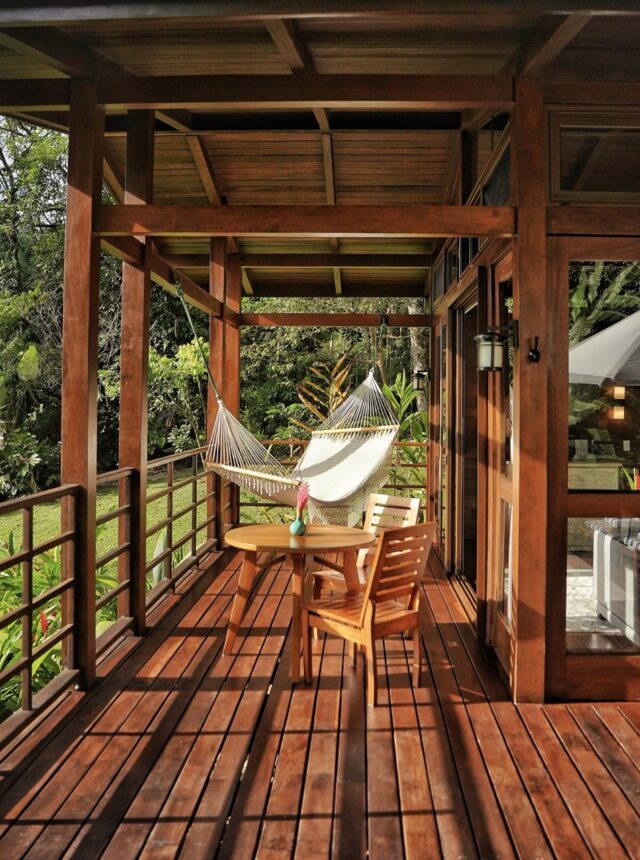
Just some genial advice from the friendly general manager at Playa Cativo Lodge. He’s only slightly kidding. There is, in fact, a puma who likes to sleep under the bungalow next to mine. She purrs like a kitten—which, it turns out, is exactly what pumas sound like. The Osa Peninsula is one of the few places in Central America where five wild cat species still roam continuous protected forest. The puma is just the most sociable.
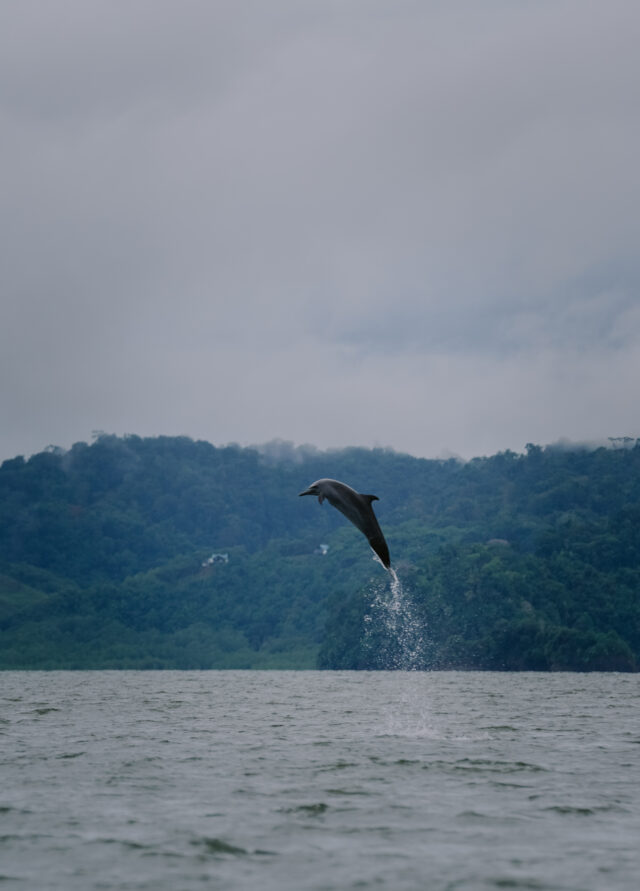
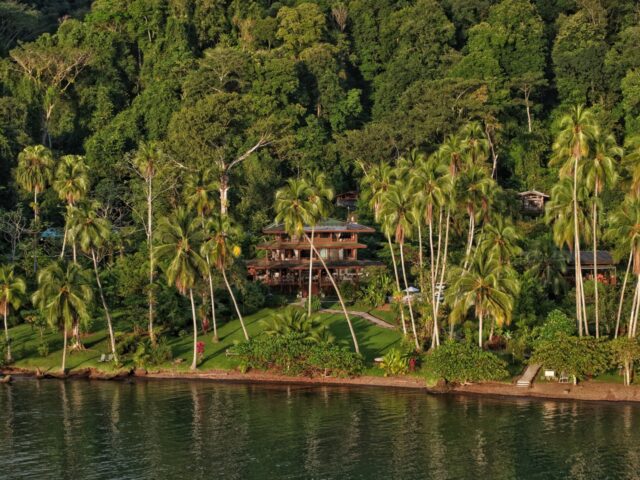
Playa Cativo is accessible only by boat, which is the first sign that you are going somewhere genuinely apart. As you motor across the Golfo Dulce, coconuts bob in the water around you. If you’re lucky—and here, luck tends to find you—dolphins appear alongside the hull. The lodge itself sits on a private wildlife reserve near the Osa Peninsula, one of the most biodiverse places on earth, bordered by national parkland and the kind of jungle that feels utterly indifferent to your presence. With just 18 rooms and a maximum of 32 guests, the place runs on nature’s clock. By 9 p.m., everyone is asleep. By 5:30 a.m., everyone is up. Within a day, you stop noticing the difference.
Playa Cativo has a past as colorful as its surroundings. It was once known as Rainbow Paradise, a commune where, as the story goes, naked hippies roamed the woods. The current owner bought it in 2008, completed a full renovation in 2018, and finished just in time for the pandemic to arrive. The jungle, unbothered, waited. The place emerged fully intact and fully wild. Rainbow paradise, found.
Days here unspool in layers of green and blue. A morning sunrise yoga session on a wooden platform overlooking the calm gulf waters, giant electric-blue morpho butterflies drifting past. Hummingbirds. Agouti traipsing along branches. On a guided nature trail, a Jesus Christ lizard—so named because it runs across the water, trapping air bubbles beneath its feet to stay afloat. A baby red-tailed squirrel. Leaf cutter ants taking out the trash with characteristic efficiency. A bloodwood tree, its sap running red. A kapok tree, its roots erupting from the earth. Spider monkeys—it’s baby season, and they are endangered—in the canopy above, in one of the only places where all four of Costa Rica’s native monkey species still live side by side. Scarlet macaws squawking at each other. Yellow-throated toucans heard before they’re seen. On one morning walk, an anteater ambles across the path, climbs a tree and feasts on ants with unhurried focus, drool spilling from its mouth.
One evening, we are instructed to board a small boat and close our eyes. When we open them: a bioluminescent bay. It’s a new moon, so the effect is especially vivid—what appear to be stars in both the sky and the sea, the water alive with cold blue light—caused, we’re told, by dinoflagellates, single-celled organisms that flash as a defense mechanism when disturbed. Smiles erupt as we witness this simple moment of nature’s awe.
Pantropical spotted dolphins and a rare inshore ecotype of bottlenose dolphin patrol these waters year-round, along with sharks, hammerheads and sea turtles. Humpback whales come from the south in August and September to give birth in the protected gulf—killer whales don’t enter here, which is precisely why the humpbacks choose it. In December, a second wave arrives from the north, making this the only place on earth where two distinct humpback populations migrate to the same waters. Our guide is most thrilled to spot a yellow-bellied sea snake slipping through the water—the only snake species in Costa Rica for which no venom antidote exists. She urges caution while barely concealing her delight.
Later, we watch guests haul in four enormous black tuna. That evening, the catch becomes sashimi. This is that kind of place.
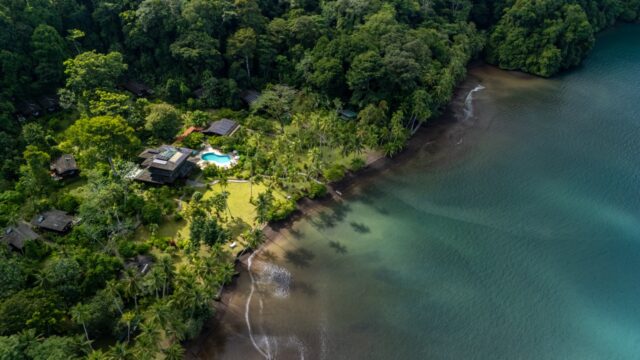
The beach is not the white-sand fantasy of a travel brochure—it is rocky and real, the calm protected waters perfect for long, meditative swims. The smooth stones underfoot make for nature’s unintentional reflexology path as you make your way into the bath-temperature sea. Dinner is served at sunset by the shore.
After a day like this, the bungalow’s private plunge pool feels like a reward. I sink in with a glass of Chardonnay, the jungle humming around me, and watch the night sky for shooting stars. Make a wish. Wish already fulfilled.
The Osa Peninsula sits within one of only four tropical fjords on earth—formed not by ice but by tectonic shifts, creating a warm, deep inner sea ringed by rainforest. The 360-degree sensory immersion—emerald forest, turquoise water, marshmallow clouds drifting through blue sky—is total. This is not a place you visit so much as surrender to. The puma under the bungalow understands this. She’s been here longer than any of us.
Explore more in Mindful Travel at The Purist.
Never miss an issue—join The Purist community.