








By Cristina Cuomo
Brandi Carlile has never been particularly interested in playing it safe. Over a career spanning two decades, the 11-time Grammy winner, two-time Emmy winner and New York Times bestselling author has built a devoted following not by chasing trends but by going deeper—into her own truth, her own contradictions, her own joy and grief—and inviting listeners to do the same. It’s a practice that has made her one of the most trusted voices in American music, and one of its most generous spirits.
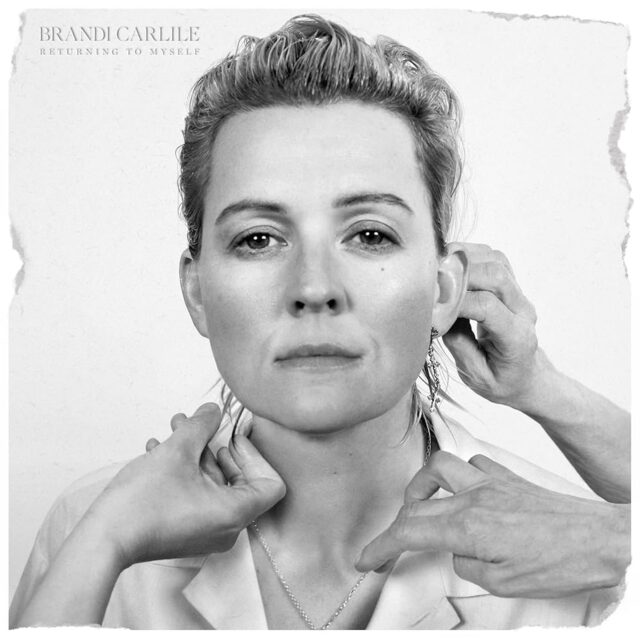
This summer, that generosity brings her to Montauk, where she headlines the annual benefit concert for the Montauk Point Lighthouse, a cause that fits naturally alongside her long record of environmental and humanitarian advocacy. Her latest album, Returning to Myself, was written in the wake of her years collaborating with Joni Mitchell, and it shows: These are songs built from the inside out, lyrics first, music second, every word carrying the weight of hard-won self-knowledge. In a wide-ranging conversation with Purist founder Cristina Cuomo, Carlile talks about what it means to protect the places and people we love, the athletic discipline required to keep a voice in peak condition, and why the most powerful thing any of us can do—in art, in politics, in life—is simply refuse to be anyone other than who we are.
PURIST: Thank you so much for joining me, Brandi.
BRANDI CARLILE: Hi. It’s my pleasure.
I’m so grateful to you—for your beautiful music and for gracing our July issue.
Oh, thank you for having me on it. I’m excited.
You’re headlining the benefit for the Montauk Point Lighthouse in July. As someone who captains her own boat and has a deep connection to the water, did that personal relationship to marine life factor into your decision to support this particular cause?
Well, it made me intrigued. I understand the importance—both historically and practically—of lighthouses, so it’s really cool to be able to be a part of it. And I freaking love Montauk, so I just can’t wait to get there and be with everybody.
The concert benefits this ongoing preservation effort for this National Historic Landmark, and your new single, “Life on the Run,” is partnered with the National Park Foundation. Is there a through line in your thinking right now between protecting physical places and what they mean to us?
If you really want to find the heart and soul—the wholesome goodness that is still very much alive and kicking in this country—you don’t need to look much further than our state parks and our historical monuments. They tell the story of who we are, and give us something to shoot for, something to indicate where we’re going. I think those things really are unifying.
They give us a sense of purpose, too.
Absolutely. Knowing people that value and work on our historical landmarks and monuments and state parks is incredible, and they’re my kind of people. Nerds.
Returning to Myself grew out of a poem you wrote the morning after the final “Joni Jam” and you went into the studio without finished songs and just that vision. How different was that process from anything you made before, and what did it unlock?
It’s different from anything I’ve ever made before. Occasionally, in the past, I would write a song without music, but Joni changed that. After working with Joni for the last five or six years, I only write lyrics first now. The music has to be second to that poetry.
Is that her process?
I don’t think it’s her process. I think it’s just that being with a poet—one of the greatest all-time wordsmiths—and watching her relearn her lyrics after her aneurysm, put all the weight on lyrics for me. Printing them out for her, holding them in front of her—it put lyrics in my hands in a way that I don’t think many people will ever get to really experience. It was like she wrote them one time, and then she relearned them, and I got to watch that happen. It just made words very important to me.
Going to your personal journey, you were out from the very beginning at a time when the industry still heavily pressured artists to hide or soften their identities. When you look back now, how did that transparency protect your creative autonomy? Do you think authenticity is linked to longevity?
Yeah, authenticity is linked to longevity, because it’s exhausting being someone that you’re not. Not that I would know, because I only really can recall being out. I have been so involuntarily and lovably gay my entire life that it’s just been something that has been obvious about me for as long as I can remember. I’ve had no choice but to navigate life as a gay person—and I’ve met way more acceptance than rejection.
Purist is all about health and longevity—and not just physical health, but sustaining creativity and purpose over time. What does genuine self-care look like for you at this stage in your life and career?
It’s funny, I find the phrase “self-care” to be a little bit triggering, even though I shouldn’t. And even the concept of Returning to Myself as an album starts to veer quite radically into the concept of self-care. The truth is, I think you can do self-care with other people—you can ask other people to care for you and care with you, as you do the same with them generously. That increases longevity. We all know that studies show that we’re better together, and that people live longer when they have community and love. I find all of my self-care in community with other people. Having said that, I do a lot physically in my mid-to-late 40s just to get myself onstage. I have to really partition off enough time for myself to do that.
What’s in that regimen?
It changes. Right now, I’m doing a lot of working out, like balance and stability stuff—isometric holds, those kinds of training techniques. I’m trying to work on my alignment, because of the misalignment that it almost requires to stand on stage and play guitar. And I have to work on my voice all the time. Everything I eat, drink and do has to do with preserving my voice nowadays. It’s such an athletic thing past a certain age—you won’t be able to preserve it if you drink alcohol, don’t stretch it, and don’t watch what you eat. You go to sleep after eating. There are so many factors involved in keeping an aerobic singer performing at the top of their ability. That is where I am at this point in my life, and I’m really proud of that, but it’s not been easy.
I’m going to share that with my daughter, who is a singer. She’s 23, so the habits are not stable yet.
No, but the worst part, and I think this is probably true for every part of your body—and the thing everyone tells you and you don’t listen—is that it’s not like, “Hey, when I get older I’m going to have to start caring about this.” You do the damage when you’re 23, and when you get older you’re having to take care of that damage. That’s been everything—for every muscle in my body to my voice. But what can you say to a 23-year-old, really?
You and your wife are raising two daughters in a world that feels increasingly fractured. What’s the value you find yourself coming back to most, either at home or in the music you’re making now?
Time with my daughters is heaven. It’s just paramount—even if they’re fighting, even if I’m truck tired, even if I’m driving them to school, even if they’re sick. Sometimes, especially if they’re sick, to be honest. My oldest daughter was sick yesterday, and she stayed home from school and it was magical because she’s 12 and she doesn’t want to need me as much anymore. She really needed me yesterday. So, time with them is just heaven. I have one daughter who really likes to do what I like to do, and one who doesn’t. I find that really interesting, because one is like my best girlfriend and meets me where I’m at, and one pulls me into new territory. They’re so different and they’re so magical.
How has making this album changed how you think about rest, recovery and what you actually need to keep going?
It’s hard to know whether it’s making this album or whether it’s just my age. I think this is the age that we come to a reckoning. It’s a great reckoning. Like, how long am I going to people-please? How long am I not going to be careful about what I put in and on my body? How long am I going to not prioritize making memories with my kids over obsessing over my career? These are the existential questions that come with your 40s, and making an album for me is just about authentically documenting a moment in an artist’s life. It’s innately selfish and that’s OK. Throughout my life I’ve made albums that document honestly exactly where I am, and that’s what Returning to Myself is right now, and I think also that’s why so many women are relating to it—because we all must return to ourselves and it’s a lonely thing to do, but it’s the only thing to do.
That’s beautiful. We do reach these milestones together. Your Looking Out Foundation centers on giving voice to the unseen. Where is your attention being pulled most right now, and how do you sustain that kind of advocacy without letting it consume you?
I like that you phrased it as where my attention is being pulled, because that is exactly the kind of activist I am—passion-based. Over time, my attention has been pulled in many different directions: need, politics, the environment, attention to natural disasters, conflict overseas. Right now, and for a few years, my attention has been pulled most consistently to the plight of displaced people—not just globally, but here at home. And by displaced people, I mean refugees and asylum seekers, immigrants, economic migrants—anyone who’s left their home because they had to. The way that we treat and receive those people in this country is a true test of our humanity, and how the United States will be remembered. I feel really passionate about the injustice of what ICE is doing and how we are treating and receiving economic migrants, immigrants and asylum seekers in this country. And not just that, but how we interact with them and how we show up for them globally, because it is a global issue.
After that benefit concert in Minneapolis where you brought out a local choir to perform “It’s Okay to Change Your Mind” as a protest against recent ICE actions, you told Rolling Stone that Trump voters had been scammed, but that it’s OK to change your mind. Do you think shame is the biggest obstacle to political healing right now, and how do you hold that kind of empathy when you’re also genuinely angry?
When I said the line that Trump voters had been scammed, it was part of a larger story. I was trying to show some understanding to people who were burnt out, stressed-out, down and out—people looking for someone to lift them out of a situation they didn’t feel they deserved. I have my own personal feelings about politics; I don’t even like naming Trump or his administration—I’ve tried to make it not my reality. But the concept was exactly that: Don’t let shame, or realizing that someone isn’t who you believed they were, make you double down on that decision. You can change your mind—and it doesn’t mean embracing the other side. It just means change your mind.
You’ve built your life around nature quite deliberately—90 acres in the Cascades, regular trips to the Olympic Peninsula, and now supporting a cultural landmark on the East End of Long Island, the Montauk Point Lighthouse. How does that deep connection to the natural world inform your creative life?
It’s a profound rocket launcher for my songs, my aesthetic, my beliefs and the way I recreate. It’s all based on being in the great wide open, being on the ocean particularly. If I were only in urban spaces, I would only write one kind of song. But when I am in urban spaces I treat them more like people would treat the country, like a rarity. I’m there for work. One thing I love about cities is the people. I freaking love people, so being around people is amazing. But I need to recharge my batteries in the country, and I always will.
You’ve long championed female artists, most recently reflecting on Lilith Fair’s legacy. How do you see spaces like your Echoes Through the Canyon weekend actively changing the industry’s culture, not just celebrating it?
I see it actively changing the industry’s culture like so many women have done before: just by simply proving that we can sell tickets. For women and nonbinary artists to succeed in headline positions, men need to listen to women make music—and when they do, it’s really beautiful. I have a festival in Mexico every year called Girls Just Wanna Weekend, and it’s all women and nonbinary artists. Every year more and more guys are coming. They’ve become our guests of honor, because they’re doing the thing that will change inequality across industries, not just music. When men show up to that festival, they are disproportionately revered.
I love that.
We can’t do it without them, and I can’t lie: When I’m looking out in the audience and I see a bunch of dudes out there digging what I’m doing, it makes me feel very good and very cool—and really hopeful for my kids.
And speaking of men, you worked with two co-producers, Andrew Watt and Aaron Dessner, across two different studios and describe them as an unlikely pairing you had to broker. What did each bring to the record and how did that tension between Dessner’s sensitivity and Watt’s audacity serve an album that’s so deeply about you and your own voice?
The most important takeaway is that they were generous to understand that. They were in a it’s-not-about-me position where they were able to just set themselves aside in service of what I was trying to communicate musically. Those are the rock stars—men who will actively support a woman, and maybe even subjugate themselves in one way or the other. It was an unlikely pairing, but they were cool to each other, cool to me, and we made really good music together.
You certainly did. It’s such a great album, and I cannot wait to hear you perform it live in Montauk.
Brandi Carlile performs at the annual benefit for the Montauk Point Lighthouse on July 23; montaukhistoricalsociety.org/montauk-point-lighthouse
Explore more in Entertainment at The Purist.
Never miss an issue—join The Purist community.