







By Ray Rogers
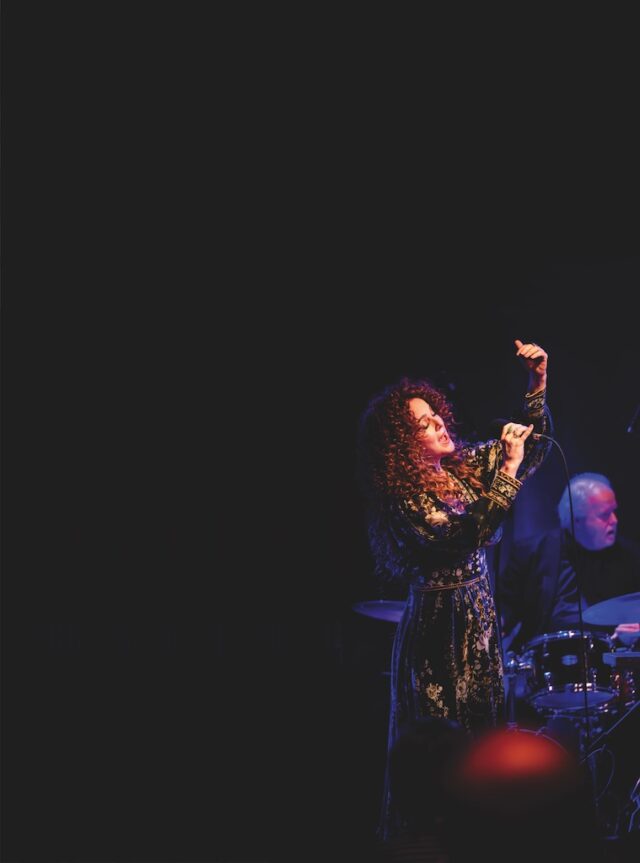
Tony–nominated actress, singer and writer Melissa Errico brings her acclaimed concert The Streisand Effect: Melissa Sings Barbra to Bay Street Theater in Sag Harbor on Monday, August 17. She’s joined by pianist Billy Stritch—a longtime Streisand collaborator—and a swinging quartet. The evening moves through Streisand standards like “People,” “The Way We Were” and “Send in the Clowns,” but the critically hailed show becomes less about homage than reinvention: a study of what happens when a performer finds her own voice within another’s repertoire.
PURIST: The Wall Street Journal review says the show starts as Streisand homage and ends as self-discovery. Did you build that arc in, or did it show up after enough nights onstage?
MELISSA ERRICO: I discovered the structure, the architecture of the show, in the process of doing it—that always happens—but from the beginning I knew I didn’t want to do a simple tribute show, where I copied or, God forbid, tried impersonating her. I wanted it to be an homage, meaning a concert where you try to chart all the paths an artist left open for the next generation to follow. It’s not an attempt to recapitulate what she achieved, but about everything flowing from this wonderful source to undiscovered rivers and unknown ground. It’s about the open road ahead that a great artist pioneered for us.
You’ve built a career interpreting other people’s songbooks—Sondheim, Legrand, now Streisand. What’s different about singing Streisand versus, say, Sondheim?
“Evergreen” aside, Barbra isn’t really a songwriter. She’s a presence—a performer. So, I’m interpreting her interpretation of other songwriters, and particularly of those two whom we share, [Michel] Legrand and [Stephen] Sondheim. Her version of both those songwriters, whom she knew well and worked with closely, is her own: passionate, sometimes wistful, and in the most enviable way very “Brooklyn.”
My approach to them (and they were friends and mentors for me as well) is maybe more sensual, intellectual, even agonized—very Italian! Barbra’s influence is felt for every other woman singer as a series of possibilities and permissions: to climb higher than you thought possible and sing and speak more strongly than was thought acceptable for a woman, before she made it so.
The Grammy-winning pianist Randy Waldman (with whom you created this concert in 2025) spent over four decades working with Streisand directly. Has he shared anything about her process that changed how you sing these songs?
Randy adores this music, and when he plays, sometimes I have to look over at him to make sure he’s not a record. I was set up with Randy five years ago, and we began with a duo concert of Sondheim’s music. We then created holiday concerts, and a year after that, he did my West Coast tour of film noir jazz. He often said I should sing closer to Barbra’s exact keys, which sat my voice less in soprano terrain and in a more earthy, conversational tone with the temptation to belt. Randy both eased and stretched my technique.
Now you are touring the show on the East Coast with jazz pianist Billy Stritch.
Yes, this project has grown! And when I had encore concerts to do in Manhattan, I called them “Back to Barbra (With Billy),” a wink to her Back to Broadway album. Billy brings me the chance to sing duets and to share a mutual respect for Barbra. He is mentioned in Barbra’s autobiography because he was Liza Minnelli’s accompanist for decades. Billy understands divas, and he brings a feeling of joy to every performance we do. We are excited to play Provincetown Town Hall on August 23, followed by Palm Beach, Emelin Theatre and more. The audience loves his laughter and our glee, especially when we sing disco. Enough is (never) enough!
What’s the thing about Streisand’s singing that other interpreters get wrong? “Send in the Clowns” and “People” are songs a performer can vanish into. How do you keep your own versions from getting swallowed by the originals?
Of course, I adore her readings of both those songs—and “People” is so hers that I can only do it in musical quotation marks, so to speak. But inevitably, my own experience flows into my singing.
For Barbra, “Send in the Clowns”—which she urged Steve Sondheim to write some new lyrics for, and he did, an amazing thing!—seems addressed to Fredrik, the lover she was hoping was still waiting for her. For me, it’s more interior: I see it as the self-directed song of a woman who got everything she wanted and ended up with nothing she wanted. As a mother myself, I can imagine the pain of a woman consumed by her work to the point of losing her life. Our versions rise from our own unique experience, which you can’t avoid as a performer. You can’t force a new version. It finds you.
You’ve said this show is as much about finding your own voice as it is about Streisand’s. Is there a specific moment—a lyric, a key change, a bit of banter—where that shift happens most clearly?
The shift happened on page 729 of her book. I came upon Pat Conroy’s letter and how he called Barbra a woman of genius and vision—a “daughter of fire.” Barbra loved that expression, and so did I. Then one day, one of my three daughters, Juliette, apologized to me for a small disagreement. I’d forgotten about it, but she approached me and was deeply thoughtful. She said she doesn’t know why she gets so intense, that sometimes she feels she’s “on fire.” This stopped me. It inspired me to call David Shire and ask him to write a new song for this concert called “Daughter of Fire.” I absolutely love it. With lyrics inspired by Rumi, it is an incantation with a Van Morrison-style 1970s driving arrangement. I sing of two things: awe, for one, and for the divine feminine strength that Juliette deserves to have and harness.
In a more meta sense, I hear the melody of “On a Clear Day” in my head every time I step into this show. The clarity and boldness and sheer beauty of Streisand’s collected work feels healthy to be around. You know that melody? “Rise and look around you…and you’ll see who you are.” This concert feels so good at this moment—it’s got songs we all love, and her songbook lets us feel everything from absurd silliness to honest longing. It’s a clear day, and an invitation, we need. Have you ever heard the Rumi line of poetry: “Why did I make brooding my vocation when awe was an option?” baystreet.org
Explore more in Culture at The Purist.
Never miss an issue—join The Purist community.