







By Dimitri Ehrlich
I was 10 years old when I saw the original Rocky in 1976. The next morning, inspired by the movie’s infectious spirit of perseverance, grit and determination, my younger brother and I attempted to drink a glass of raw eggs and jog around the block. We were but two among the millions of fans for whom the Rocky films became more than a franchise, growing into an integral part of America’s culture of optimism and belief in the possibility of winning as an act of sheer willpower.
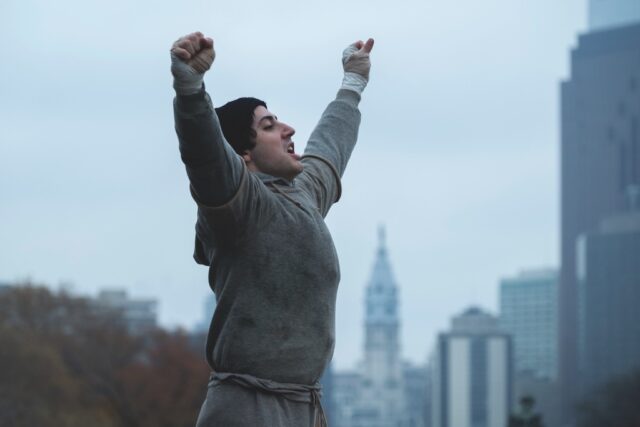
In I Play Rocky, a movie about the making of the Rocky film, Anthony Ippolito manages to capture that same spirit. The film tells the story of how an unknown Sylvester Stallone wrote the screenplay for Rocky in three-and-a-half days. After selling his script to two Hollywood producers, Stallone—who was utterly broke at the time—was willing to turn down $360,000 if that meant he couldn’t play the starring role. He convinced the producers to give him a shot, and the rest is history.
Directed by Academy Award winner Peter Farrelly (Green Book), the film is a feel-good story within a feel-good story. The crowd-pleasing themes of refusing to quit and overcoming incredible odds are at the heart of both the original Rocky movie and I Play Rocky. But Ippolito manages to elevate a film that might otherwise have come off as sentimental, bringing a bruised physicality to the role, and a magnetic raw self-confidence that feels pitch-perfect.
The 27-year-old Purple Hearts actor stands out as the iron-willed underdog, amid a terrific cast that includes Matt Dillon and AnnaSophia Robb. With the bulky muscles and pallid porcelain skin of a young Stallone, he looks like a body double for Rocky Balboa, and spent 18 months in the gym training for the part.
“I’d always been pretty slim my whole life,” Ippolito says. “Stallone plays a heavyweight boxer, so I had my work cut out for me. I trained myself on a strict regimen and ate to gain size for over a year. Then I began working with two incredible trainers who helped me attain the shape Stallone was in.”
Most importantly, Ippolito nails the slightly slurred Philadelphia tough-guy accent without making it sound like a caricature, and captures Stallone’s droopy-eyed doggedness.
“In the fight scenes in the original Rocky films, each feels like a personal war, and Rocky keeps getting up in spite of being beaten to a pulp,” Ippolito says. “That same indomitable conviction and heart was displayed by Stallone throughout.”
Explore more in Culture at The Purist.
Never miss an issue—join The Purist community.